

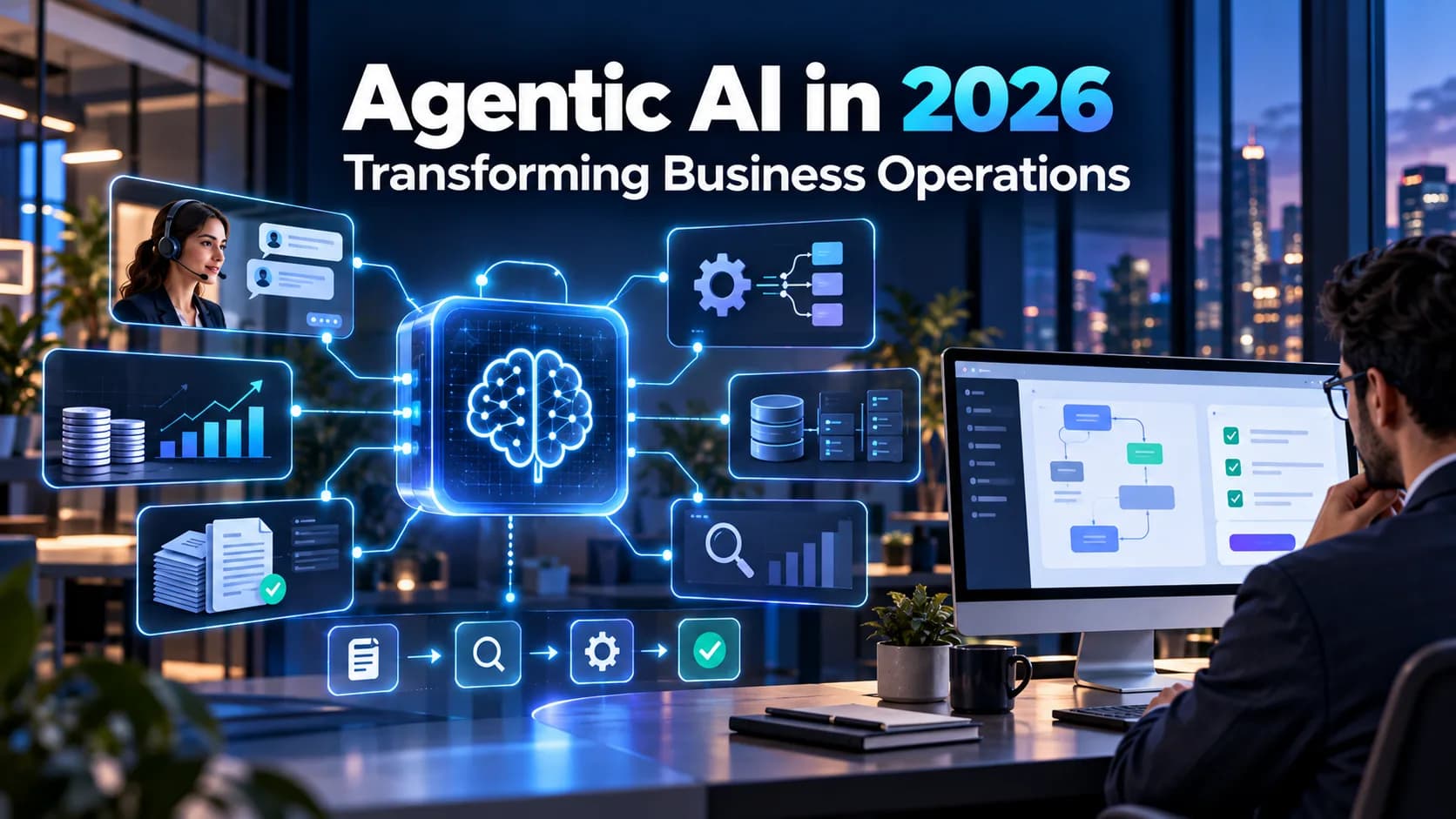
Agentic AI in 2026: How Autonomous AI Agents Are Changing Business Operations
A customer complains that their order was delivered late. First, the support agent has to check the order, contact the warehouse, find out the details of the delivery, and send a response to the client. It seems like a lot to do for such a simple request.
However, AI agents can solve this and many other similar requests in the future. They can go through multiple steps, access different software and databases, and perform the necessary actions that the company allows them to execute.
Agentic AI will fundamentally change the way companies work in 2026. The key to success will be the ability of various AI agents to accomplish integrated tasks. These tasks will require them to perform several actions, use related applications, and possibly transfer or process data between them. However, it should be noted that the effectiveness of such programs depends on the correct integration of various components, including the necessary level of AI autonomy, access to data, permissions, and human control over critical decisions.
Businesses exploring these capabilities can learn more about the AI automation and enterprise technology services offered by MatchBest Group.
Quick Answer
What Is Agentic AI, and How Do AI Agents Work?
Agentic AI refers to the type of artificial intelligence, which is capable of achieving goals by performing various acts, such as planning, utilizing relevant tools and executing actions to a certain extent.
An AI agent typically consists of a language model and a set of instructions, which control its functioning, accessing data, software programs, models or other tools required to perform specific tasks.
For example, a regular chatbot may provide instructions on filling the report for expense claims, but an AI agent can go further and examine the submitted report, check supporting documents, identify any missing or incorrect information and prepare the claim for approval.
The distinction becomes clearer when comparing these approaches.
An AI agent is not necessarily independent of people. Businesses determine which actions require approval and which can proceed automatically.

How Are AI Agents Changing Business Operations in 2026?
The main changes in business processes will be the possibility to bind processes that previously involved several workers or disconnected applications.
Customer Service and Service Management
AI agents will be able to assist staff by retrieving customer data, classifying queries, checking the status of orders, and combining relevant information for responses.
Where applicable, an agent may be authorized to perform approved actions in a connected workflow, for instance, requesting a refund.
Strict protocols should be established on handling account detail requests and complaints.
Finance and Administrative
Finance departments are in charge of accounts payable and receivable, expense claims, and reports and can benefit by using AI to compare documents, identify missing data, and organize transactions for auditing.
Their work often involves repetitive data entry and verification, moving the information between systems.
Finance related approval and payments should be subject to additional controls.
IT Operations and Internal Support
IT departments are often overwhelmed with service tickets, account unlocks, or system messages that are repetitive.
An AI agent can collect and structure the relevant details, classify the incidents, and recommend or perform some first line troubleshooting, and escalate unresolved issues.
The same technology can advise or help with non production infrastructure changes, while production infrastructure modifications require stricter oversight.
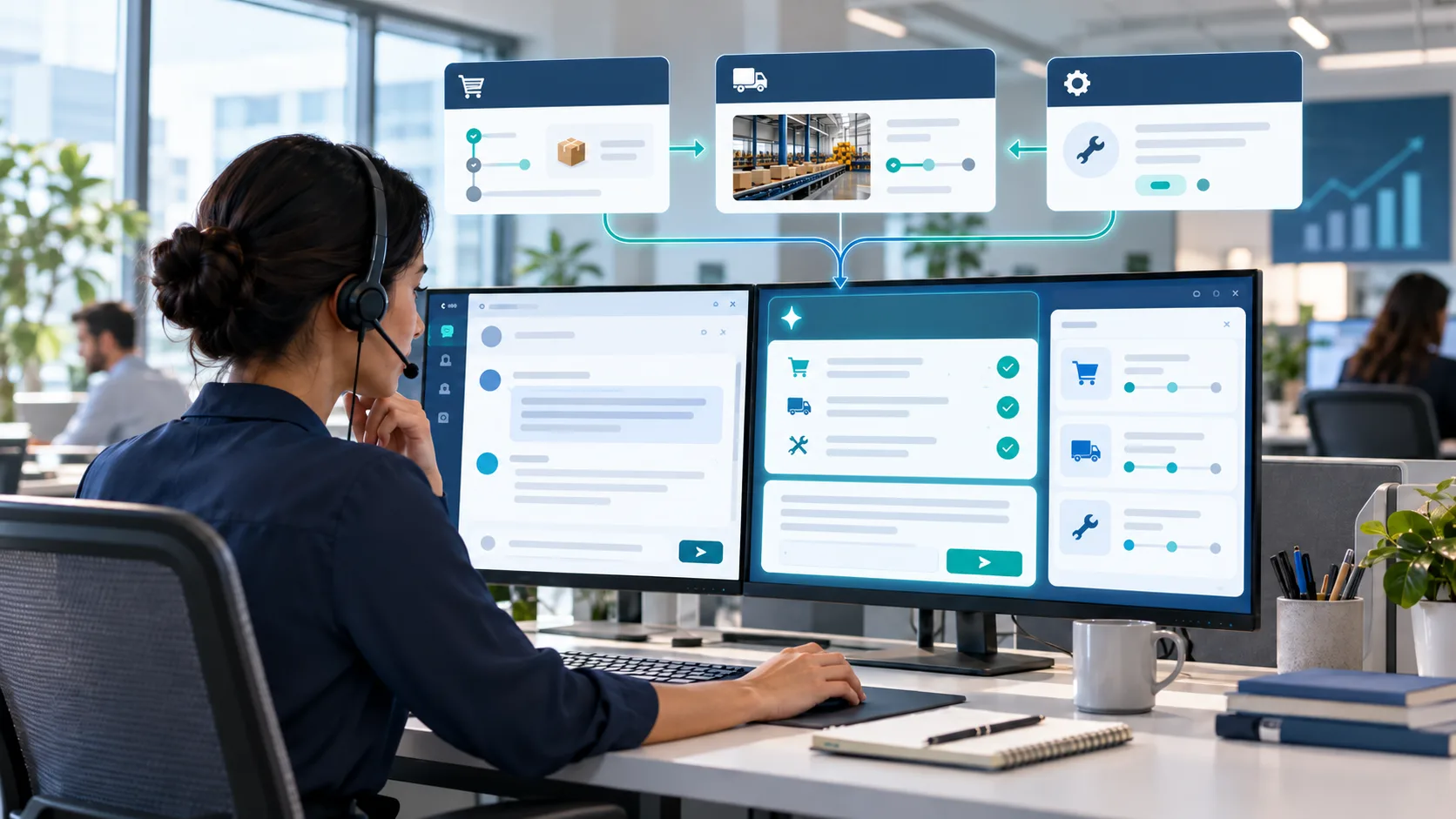
What Does an Autonomous AI Workflow Look Like?
Consider a growing ecommerce business handling delivery complaints.
A supervised agentic workflow could operate through five stages:
Receive the request: The agent identifies a delivery-related complaint and extracts the order reference.
Retrieve information: It checks authorized order and shipping systems for the latest available status.
Evaluate the situation: It compares the information with the company's approved customer-support procedures.
Prepare an action: It drafts an appropriate response or requests additional information. Refunds and other restricted actions require employee approval.
Record the outcome: It updates the support ticket and records the actions taken for review.
This hypothetical example illustrates how agents can coordinate tasks without being given unrestricted authority.
Businesses examining these workflows can also explore how intelligent automation reduces operational bottlenecks across business departments.
The practical benefit comes from reducing repeated handoffs while keeping important decisions visible.
Where Should Businesses Limit AI Agent Autonomy?
Autonomy can be a danger if an agent has access to confidential information, the ability to alter the database, or has the potential to make irreversible acts.
A misinterpretation of a customer’s instructions can lead to an inappropriate reply or database alteration.
Before allowing an agent to access vital systems, companies have to impose limitations.
These boundaries include:
Access restrictions: Give agents only the data and tools necessary for their assigned tasks.
Approval checkpoints: Require employees to authorize payments, sensitive account changes, and consequential decisions.
Activity monitoring: Maintain records of system access, tool usage, and completed actions.
Interruption controls: Allow administrators to suspend agents when unusual behavior occurs.
AI agents can also be exposed to malicious instructions hidden in documents, messages, or other information they process.
Technical protections must therefore extend beyond the agent's written instructions.

How Can Companies Start Using AI Agents Successfully?
While it is vital to make your entire department run automated, it would be easier to begin with a controlled experiment.
Here are five things that should be done before implementing the software:
1. Identify the Business Process :
It should be routine and not require any complex human expertise, for instance, sorting service tickets or verifying documentation of a supplier.
2. Define Necessary Integrations :
Make a list of software the agent would have to use and the data it can request.
3. Establish Authorization Rules :
The process that would require financial commitments, access to restricted information, or any form of external communication should be separated.
4. Observe a Pilot Operation :
The agent should be tested with various queries within the range of responsibility, including disagreements in the database or insufficient data.
5. Evaluate Trial Outcomes :
The accuracy of responses, required edits, speed, and authorizations should be reviewed before any large scale deployment.
MatchBest's discussion of responsible AI systems for enterprise scale provides additional context on accountability, governance, and human oversight.
How Should Businesses Measure AI Agent Performance?
An agent that completes more tasks may not necessarily improve the operations.
The firms should assess whether the system will produce worthwhile results without being subjected to additional scrutiny.
The indicators of the software’s effectiveness include the percentage of completed tasks, the ratio of escalated tasks, the amount of time spent by employees on the technology, operational costs, and the rate of unauthorized or erroneous actions.
The teams should also consider the reliability of the software in terms of scarce information or the failure of other connected systems.
These factors should replace the given demonstrations in the decision for expansion.
How Does MatchBest Support Agentic AI Adoption?
MatchBest Group is pleased to introduce its technology expertise in the development of agentic intelligence, AI powered automata, custom software, and cloud infrastructure.
These four areas have increased the demand for enterprise agents, as businesses now seek to embrace a combination of different integrations, secure infrastructure, and proven systems in which they operate.
When considering the adoption of agentic AI, enterprises must evaluate the multistep procedures that would benefit from being led by an agent, explore the technical underpinnings to these processes, and identify the implementation requirements.
The actual use cases for automation should take priority over the conversational aspects that an agent could provide, as operations would require a reliable, secure infrastructure, undergo trials, and be tested and evaluated.
The company welcomes the opportunity to work with enterprises to understand their requirements for automating a multistep procedure and develop AI driven technologies in collaboration with the organization.
Final Thoughts
Agentic AI will fundamentally change the orchestration of business processes at an enterprise in 2026, from responding to requests to directing action.
For the mature enterprise, the opportunity here is to dramatically reduce the number of non value adding manual handoffs in their operations and provide consistency in execution.
The most promising areas to start are with a carefully chosen set of processes that have clear permissions, metrics, and require human judgment to approve.
Autonomous AI agents should be used to improve business processes, but not eliminate them.
For more insights into agentic AI, enterprise automation, and digital transformation, follow MatchBest Group on LinkedIn.