

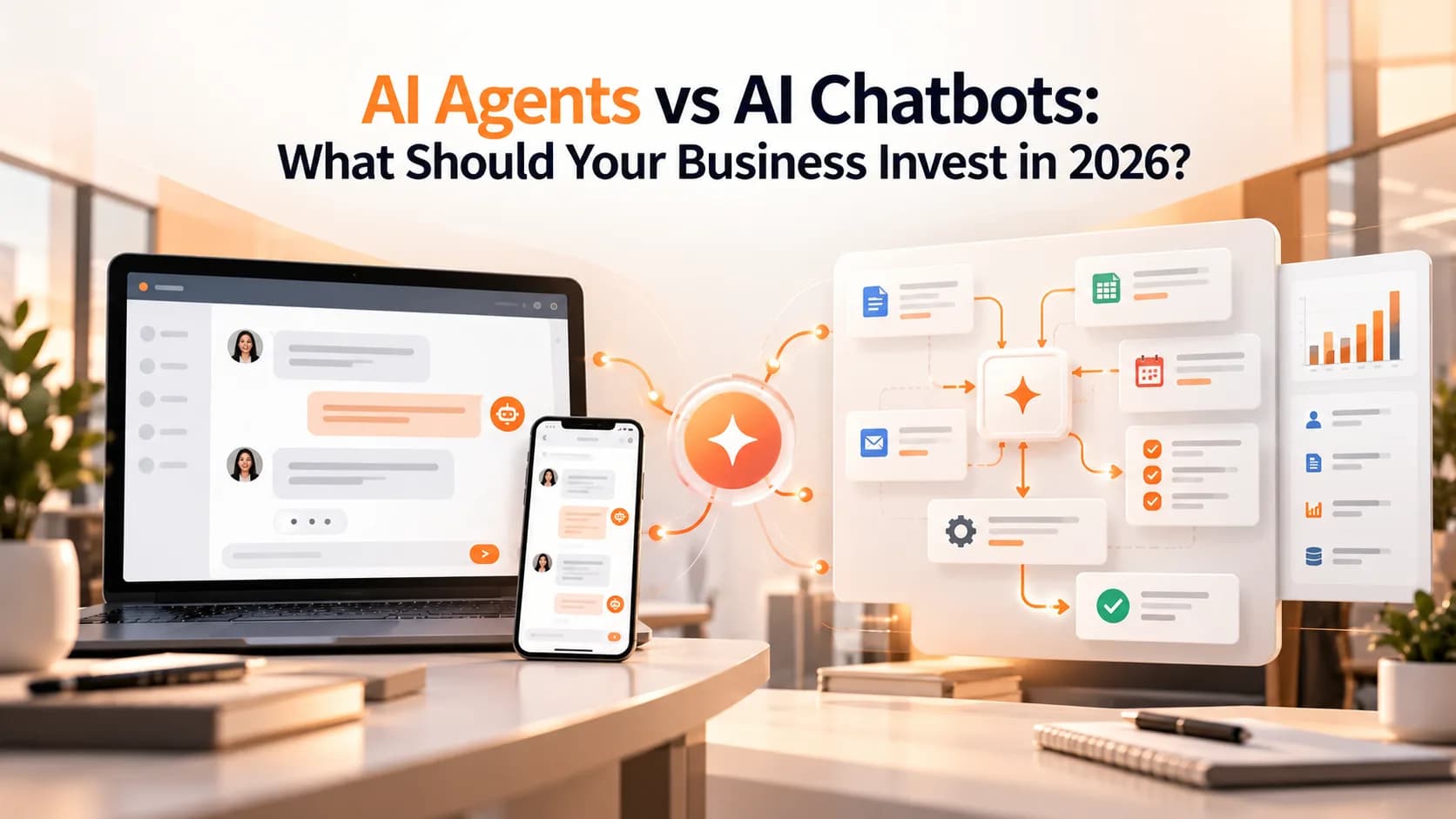
What Should Your Business Invest in 2026?
They may invest lots of time in creating complicated AI solutions when all they really need is a chatbot. Or they may spend money on creating a chatbot and then find they have to do everything manually.
Whatever you choose in 2026 between AI agents and chatbots will ultimately benefit your business as they have been created to help with specific issues.
This can improve communication, automation or both depending on what you want to achieve within your organisation.
Quick Answer
If you are trying to answer questions, offer help or search for information then an AI chatbot can be perfect. If you want to create workflows, work with multiple systems and do approved actions then AI agents can be the best option. Many businesses will benefit from combining a chatbot and an agent.
What Is the Difference Between AI Agents and AI Chatbots?
An AI chatbot is usually used to answer questions in conversation. Chatbots will use rules, AI or external sources to provide answers.
An AI agent uses goal orientated features. It can look at a situation to make decisions and interact with various software.
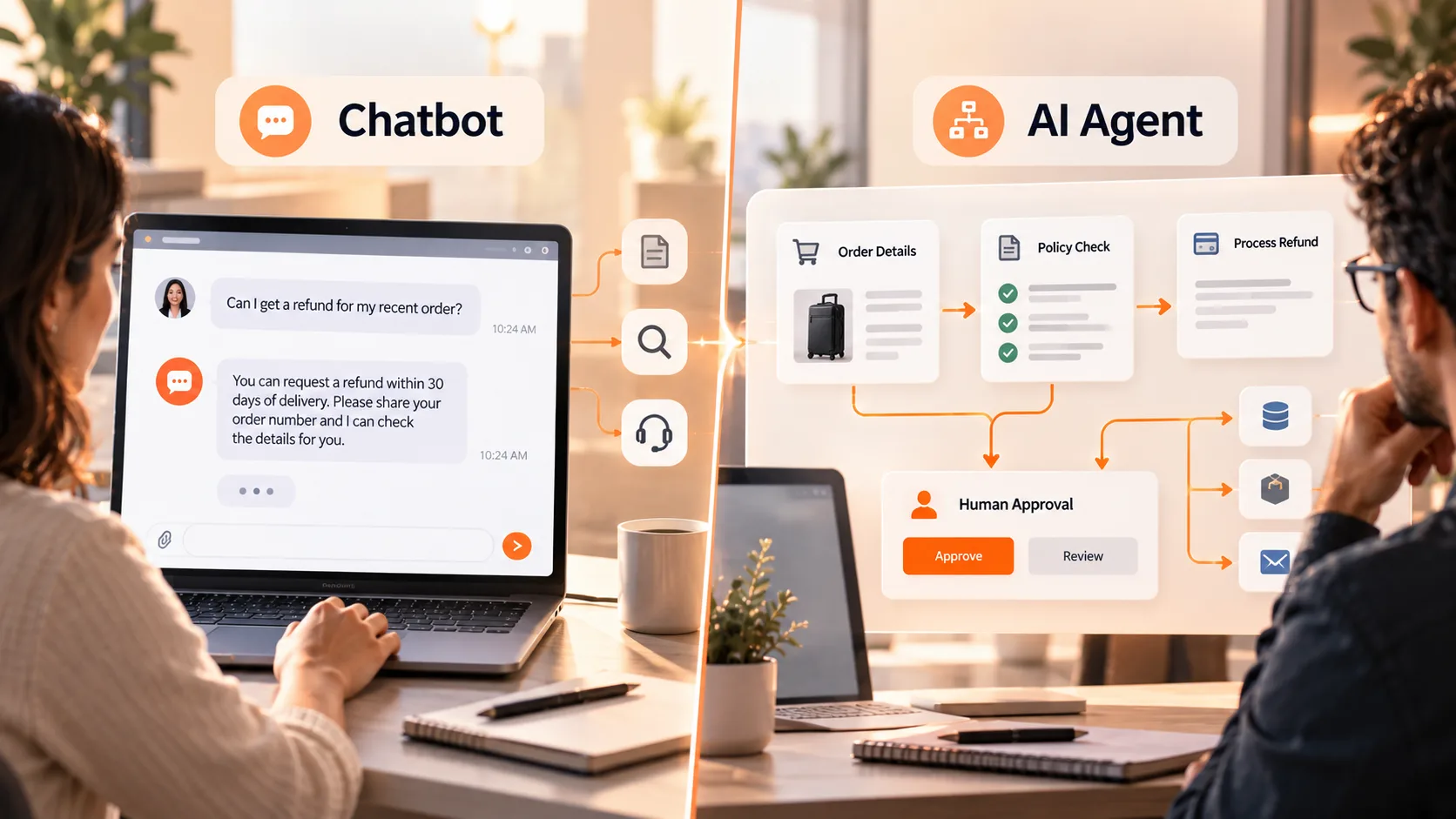
A chatbot may provide instructions on how to obtain a refund. An AI agent can look at the purchase information, make a decision whether the customer should get a refund based on company policies and place the refund into readiness.
There can be some crossover between chatbots and AI agents. Some chatbots have more complex features and can use tools. These chatbots may also have AI agents. Some AI agents use chat features.
AI Agents vs AI Chatbots: Key Differences
| Comparison Factor | AI Chatbots | AI Agents |
|---|---|---|
| Main purpose | Answer questions and support conversations | Complete tasks and coordinate workflows |
| Autonomy | Usually responds to user requests | Can plan and execute authorized actions |
| System integration | Retrieves information and may trigger actions | Coordinates actions across connected systems |
| Complexity | Well suited to defined interactions | Better suited to variable, multi step tasks |
| Implementation effort | Often lower for basic applications | Usually greater due to integrations and controls |
| Human oversight | Escalates complex conversations | Requires approval for sensitive actions |
The business decision should focus on what the system must accomplish, not which technology sounds more advanced.
When Should Your Business Invest in AI Chatbots?
Chatbots can be a great solution if your employees are often asked repetitive questions.
Chatbots can also help support customer service, product information, booking information and company knowledge.
If you have an Online Retail Store and get hundreds of questions regarding your delivery policy, having an AI Chatbot can give consistent answers using up to date information.
If you design a good chatbot it can also send complicated requests to your employees with the right context.
AI chatbots can provide businesses looking to automate conversations, with improved customer experiences.
However, if a request needs several steps to resolve it may not be suitable for a chatbot.
When Do AI Agents Become a Better Investment?
AI agents can be very helpful.
If you are involved in Procurement and have received requests from suppliers, you may need to process some documents, compare data, identify gaps and manage approvals.
By linking your AI agent to your approved systems you can do this all in one place.
This could include:
- Processing service requests
- Onboarding employees
- Matching invoices to purchase orders
- Gathering data for reporting
- Managing IT support
You will want this to be done securely with clear permissions and guidelines.
You would not want your AI agent to be able to make payments or amend any critical data.
What Happens When Both Technologies Work Together?
Many businesses will be looking to use both.
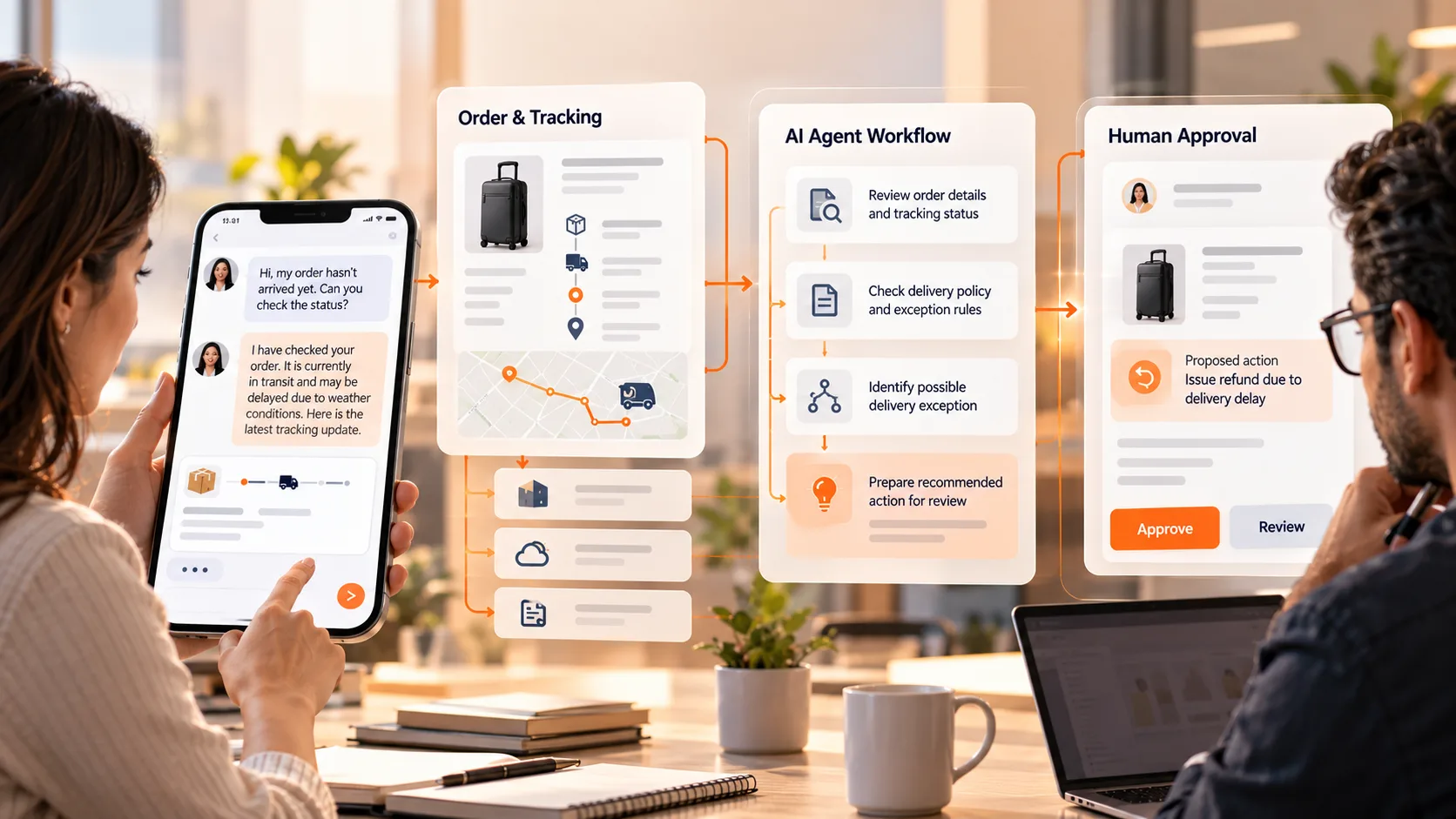
For example, when a customer comes to an ecommerce company with a delivery query:
Chatbot: The system will reply with information on the delivery policy, retrieve any tracking details and refer them to support.
AI Agent: The system will check the appropriate order information to see if there are any delivery exceptions and create an action plan that has been approved.
**Both:**Chatbot handles conversation, whilst agent performs some actions.
An employee will be passed the process to approve the refund or change of address.
This can improve coordination.
Which Option Costs More to Implement and Maintain?
Basic bots will generally be easier to implement and will require limited knowledge and simple interactions.
AI agents may need some additional effort to integrate within your business applications and manage tasks and actions.
This may include:
- Licensing costs and AI model costs
- Integration with existing systems
- Data preparation and access
- Testing, monitoring and security
- Support and staff training
Costs can increase if you are using a lot of calls to models within your workflow or multiple tools.
Instead of focusing on the costs of the software, look at the total cost of implementation and running the software.
If you are paying more for your system there should be clear benefits that justify the increased costs and complexity.
How Can Businesses Choose the Right AI Investment?
To determine if using chatbots or agents will be most beneficial to you answer the following 5 questions.
1. Is it conversational/action based?
If your customers are mostly asking for information then a chatbot would be suitable for you. However, if your staff have to interact with multiple systems to complete the request then an agent may be more suitable.
2. How complicated is the process?
If it is a simple and predictable process then traditional automation or chatbots would be suitable. If however it is an unpredictable process then an agent may be a good choice.
3. What systems need to be integrated?
Ensure you know what applications, data and permissions are required.
4. What happens if something goes wrong with the AI?
If the AI gives inaccurate answers, carries out actions that are not permitted or makes inaccurate decisions what will happen?
5. How will you measure success?
Keep track of how many issues were resolved, number of tasks completed, number of times staff had to intervene, cost to resolve any errors and overall impact on your business.
This will help ensure you don’t invest in unnecessary technology.
How Should Your Business Test AI Before Investing Fully?
Start with a targeted problem to solve
Chatbot: Test the chatbot's ability to answer common questions, handle unclear questions and escalate issues.
AI Agent: Test the AI agent's ability to perform permitted actions, enforce constraints and respond to unknown situations safely.
Compare to your current process
Security and governance deserve particular attention when systems can access customer records or perform business actions. Establishing responsible AI implementation practices helps teams evaluate accountability, transparency, and appropriate oversight.
A successful pilot should demonstrate reliable results, not simply impressive demonstrations.

How Can Businesses Prepare for AI Adoption in 2026?
Selecting whether to use chatbots or agents is only one part of the investment process. You will also need to make sure you have the right infrastructure, data availability and roadmap.
MatchBest provides various technology solutions including AI automation, agentic intelligence, cloud infrastructure and enterprise software development.
This can help organisations decide on how best to utilise conversational AI and automation within their business.
Before choosing a service provider, it is important to understand what your requirements are and look at the various AI automation and enterprise technologies available to understand what work will be required.
To ensure you have an effective solution that will help your business without causing any unnecessary complexity.
Final Thoughts
AI chatbots remain extremely useful for providing answers, support and increased access to information.
AI agents open up additional opportunities for businesses looking to automate complex processes.
Many organizations will find it best to invest in solving a specific problem with the simplest and most reliable solution, and scale when it is clear from operations that they should.
In 2026 success in adopting AI lies in not using the most sophisticated solution but instead using the correct level of automation.
For more insights into enterprise AI, business automation, and digital transformation, follow MatchBest Group on LinkedIn.