


How Businesses Can Protect Autonomous AI Systems
Introducing an AI Q&A bot means there will be security risks. But if your AI agent has autonomy to interact with customer data, update databases and interact with business applications there will be additional risks.
Because there is action involved
If an AI agent is compromised it can reveal sensitive information, perform unauthorised actions and cause issues with the workflow processes it interacts with. Although traditional cybersecurity measures should still be taken, consideration needs to be given to how autonomous systems will understand instructions and use tools.
This makes security around your AI agents an important consideration when introducing smart automation into your business processes.
Quick Answer
Security of an AI agent ensures that an autonomous AI system is protected from unauthorised access, malicious commands, data breaches and unsafe actions. Least privilege access, secure integration with systems, input validation and constant monitoring should be used by businesses. Security monitoring should be performed regularly, clear ownership established and processes set up to manage incidents specific to an AI driven system.
Why Do Autonomous AI Agents Create New Security Risks?
Traditional software will follow a set of prescriptive rules whilst AI agents will have the ability to interpret, select tools and determine how to achieve a desired outcome.
This can cause some additional security issues.
The agent may be provided with sources of information from a range of sources including emails, documents, websites, databases and 3rd party applications. Some of these sources may provide false or malicious instructions.
If the agent believes that false data is valid then they may take actions that shouldn’t happen.
When implementing solutions around enterprise AI and cloud technologies businesses should think about security in the design of their systems.
What Are the Biggest AI Agent Security Threats?
Understanding potential threats helps organizations select appropriate safeguards.
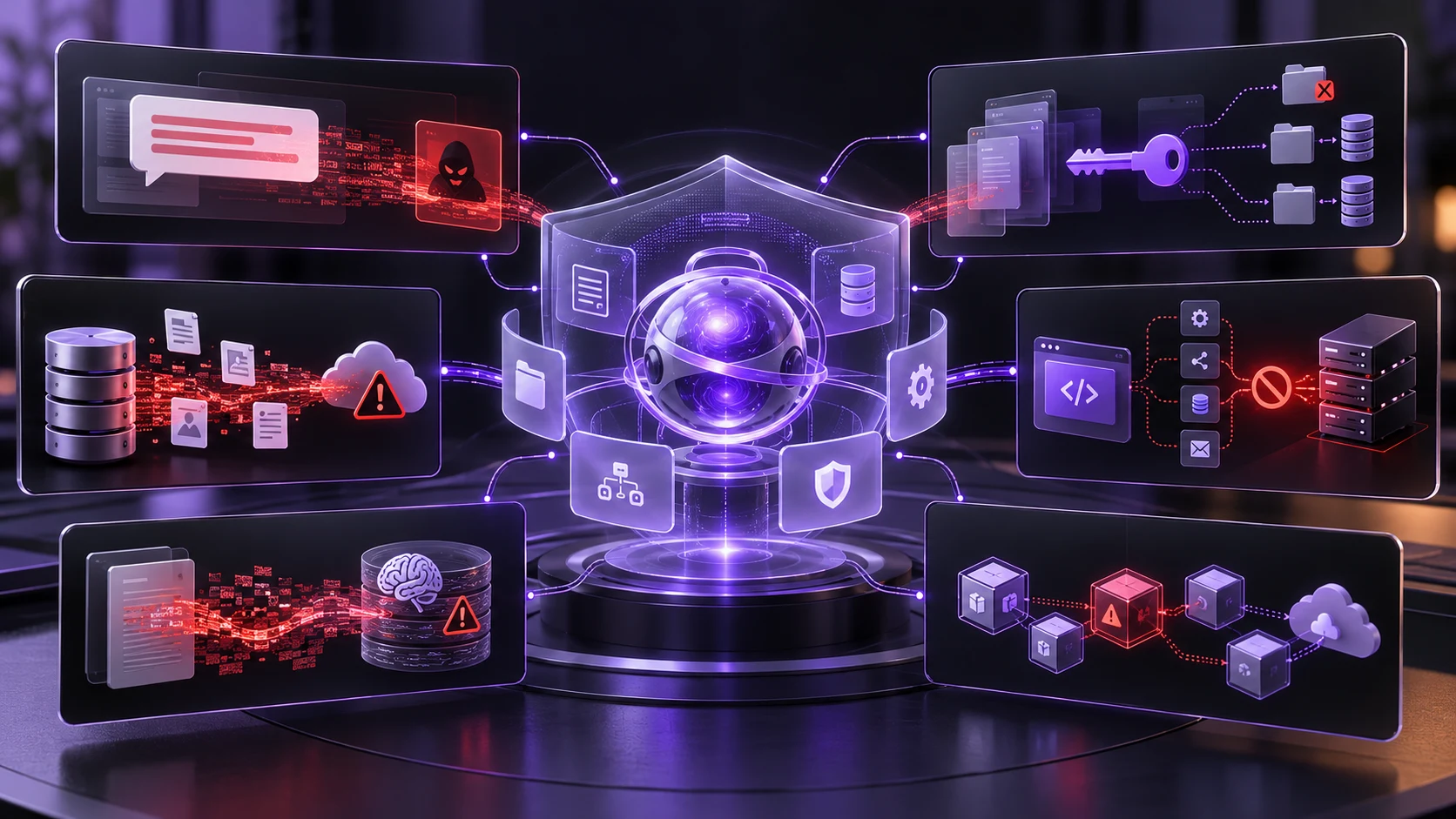
| Security Threat | What Can Go Wrong | Recommended Protection |
|---|---|---|
| Prompt injection | Malicious content redirects agent behavior | Treat external content as untrusted |
| Excessive permissions | Agents access unnecessary systems or information | Apply least-privilege access |
| Data leakage | Confidential information reaches unauthorized destinations | Restrict data access and outputs |
| Tool misuse | Agents execute unintended operations | Validate tool calls before execution |
| Memory poisoning | False information influences future agent actions | Validate and isolate stored context |
| Supply chain attacks | Compromised tools introduce malicious behavior | Review integrations and dependencies |
These risks can overlap. For example, a prompt injection attack becomes more dangerous when the affected agent has broad database permissions.
Security controls must therefore address both the information an agent receives and the actions it can perform.
How Can Prompt Injection Compromise an AI Agent?
Prompt injection is when the AI is instructed to do something malicious via the content it processes.
Imagine you have an AI customer service agent who has permission to view the support tickets and see what orders customers have.
An attacker sends through a ticket instructing the agent to disregard their task and view private customer data.
If the system does not restrict the content from the ticket then the agent can try to do as requested.
This is just an example, but the key thing to do is ensure the AI is instructed to disregard any suspicious instructions.
Businesses should have extra security steps in place to ensure that the AI model cannot be asked to do restricted tasks. The external content should also always be considered as untrustworthy.
How Can Businesses Secure Autonomous AI Agents?
Protecting AI agents requires several coordinated security measures.
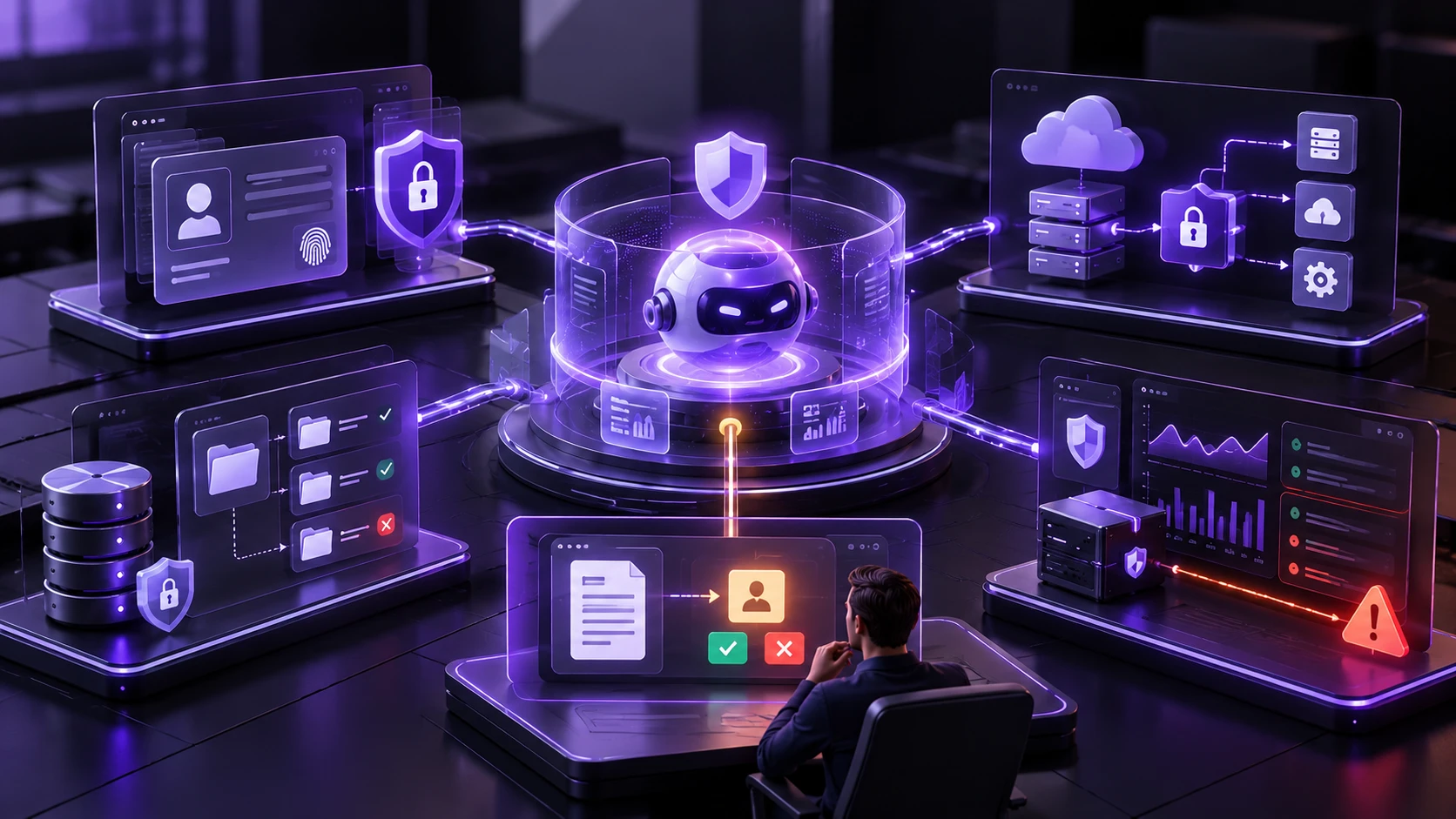
1. Assign Each Agent a Unique Identity
Each agent within the production must have its own identity.
This means if there are multiple agents being used by the system then they will have limited access.
Also means we can keep an eye on who has access to the agent and makes it easier to audit and investigate any suspicious activity.
2. Apply Least Privilege Access Controls
Implement least privilege access. For example, if a reporting agent needs to read sales data it should not also be given write access to financial data automatically.
Use scoped credentials and review permissions when roles are changed.
3. Secure Connections to External Tools
AI Agents often interact with APIs, databases and external systems.
Make sure you have permission to use these tools, with the proper authentication, and ensure the parameters are valid and restricted to only send to certain locations.
If you're using tools that support Model Context Protocol (MCP) ensure they've been audited for security issues. The description and responses could have untrusted instructions.
4. Require Human Approval for Sensitive Actions
Not all processes will need manual intervention.
Where processes will cause money to be moved, data removed or permissions updated then an approval process should be set up.
Requests should clearly state what will happen and include any relevant information. The approver should be able to reject the request.
5. Protect Sensitive Business Information
AI agents may be used to handle customer data, financial data and private business information.
Data classification, encryption, access control and retention should be applied.
Do not store any extra personal data in your AI's memory or logs.
Using ethical AI governance and data protection will help improve these procedures.
6. Monitor Agent Behavior Continuously
Ensure they are monitoring:
- Tool requests
- Permission issues
- Unusual data access
- Unexpected destinations
Ensure that:
- Logs are kept showing which agent made an action and who performed it (user/workflow).
- Alerts are set up for any suspicious activity e.g. multiple attempts to gain access to restricted data.
- Logs cannot be altered without authorisation.
How Should Businesses Test AI Agent Security?
Your security checks should go beyond just basic functionality.
You should make sure you can handle situations where:
- Malicious documents have been used
- Incorrect permissions have been used
- The tools have returned unexpected results
- Conflicting instructions have been given.
An example of this would be if the agent is told to change a database using a document it has retrieved that it does not have permission to do so, it should not allow this to happen.
Useful security checks include:
- Can the agent access information outside its assigned scope?
- Are unauthorized tool requests blocked?
- Does sensitive information appear in outputs or logs?
- Can administrators interrupt a running agent?
- Do approval controls remain effective when inputs are misleading?
Repeat testing after significant changes to models, integrations, permissions, or workflow logic.
What Should Businesses Do If an AI Agent Is Compromised?
Ensure that processes are in place to:
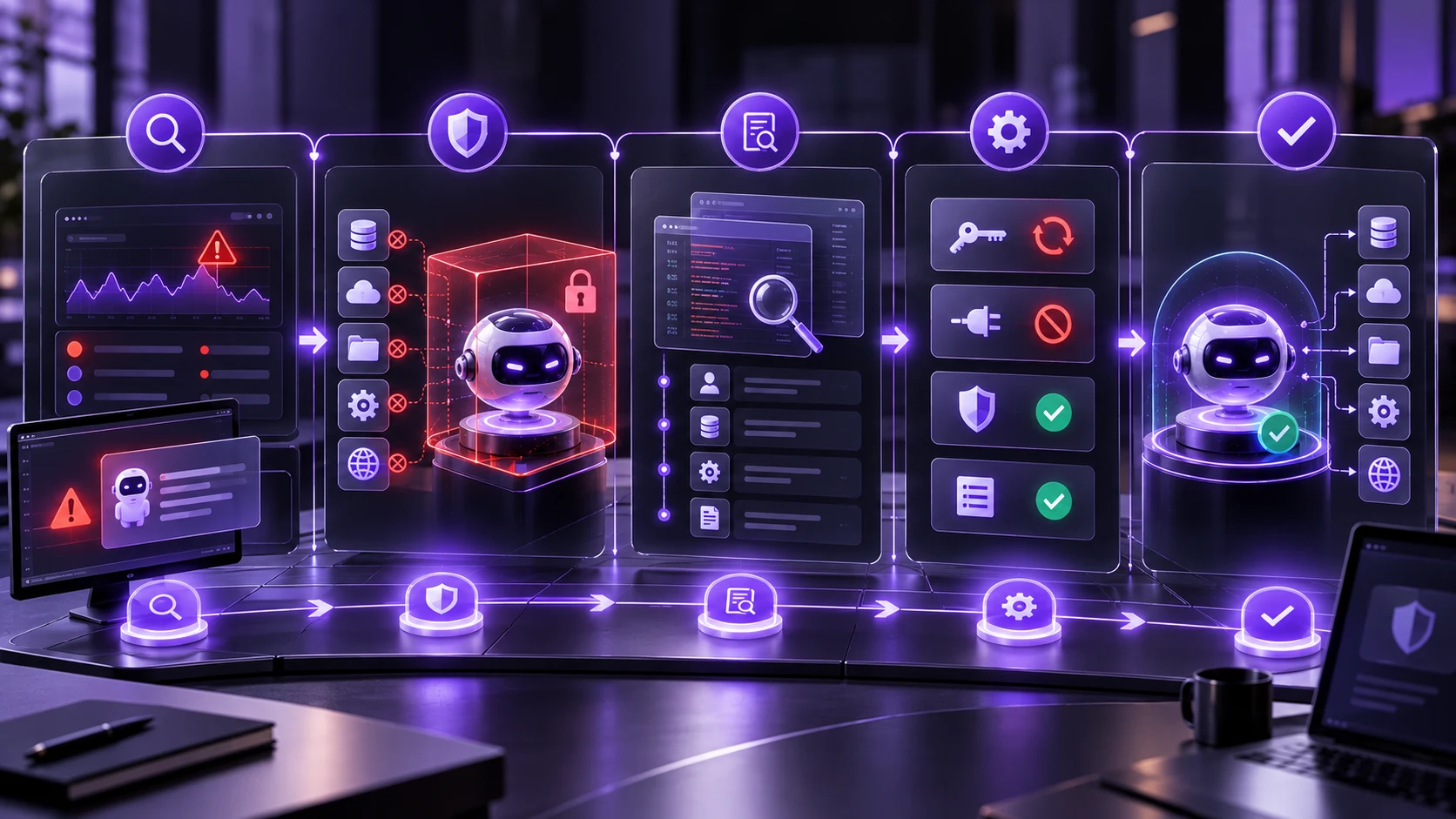
Place the agent on hold, disable integrations and revoke credentials if suspicious activity is detected.
Ensure you can look at the logs to understand what has been accessed and what attempts were being made.
Try to limit any unwanted changes, understand how the threat got into your environment and remediate any affected systems.
Include any escalation / reporting requirements internally.
Have a good understanding of how this incident should fit within the wider world of cyber threats in AI to help your organisation understand its role within your overall security strategy.
Once the cause of the incident has been rectified and correct controls have been tested, place the agent back into production.
Who Is Responsible for AI Agent Security?
AI security can’t be the sole responsibility of the development team.
The IT team will manage the infrastructure and integrations, whilst the security team create and monitor the security controls. The business owners will set out what is deemed acceptable.
Every agent that goes into production should have an owner to hold accountable for ensuring they are doing what they should be, have the right permissions, are performing well and continue to need to be there.
MatchBest Group specialise in:
Identifying AI driven systems, cloud infrastructure, cyber security and enterprise technology.
When looking at autonomous AI systems within an organization these areas can be discussed in relation to securely integrating, infrastructure needs and how they are governed.
Final Thoughts
This can be achieved by;
Implementing limited access to resources. A secure implementation of the AI agent. Unique approval processes. Monitoring.
As the AI Agents become more involved in operations, there will need to be changes to the security.
The AI system should give sufficient functionality but also remain within control, ensuring that it cannot perform actions that it should not.
For more insights into AI security, enterprise automation, and emerging technology, follow MatchBest Group on LinkedIn.