
Key Takeaways
- AI infrastructure cost optimization focuses on reducing the expense of running AI workloads while maintaining system accuracy, security, and performance.
- AI infrastructure costs mainly come from GPU and compute resources, model inference, data storage, network usage, monitoring, and operations.
- Start by measuring current spending across applications, departments, environments, and workloads. Track metrics such as cost per successful AI request, GPU utilisation, API expenses, and storage costs.
- Right size cloud and GPU resources by selecting appropriate instance sizes, using autoscaling, and disabling unused non-production resources. Test changes to avoid slower response times.
- Choose AI models according to task complexity. Smaller models can handle simple tasks, while more powerful models should be reserved for complex analysis.
- Reduce unnecessary AI processing through caching, prompt optimisation, and retrieval mechanisms. Apply proper access controls when handling sensitive or personal information.
- Control AI agent costs by limiting unnecessary tool calls, retries, validation steps, and workflow complexity. Monitor cost per action, delays, and failures.
- Select infrastructure pricing based on workload patterns: on-demand for variable workloads, reserved capacity for predictable usage, spot instances for interruptible tasks, and serverless inference for irregular demand.
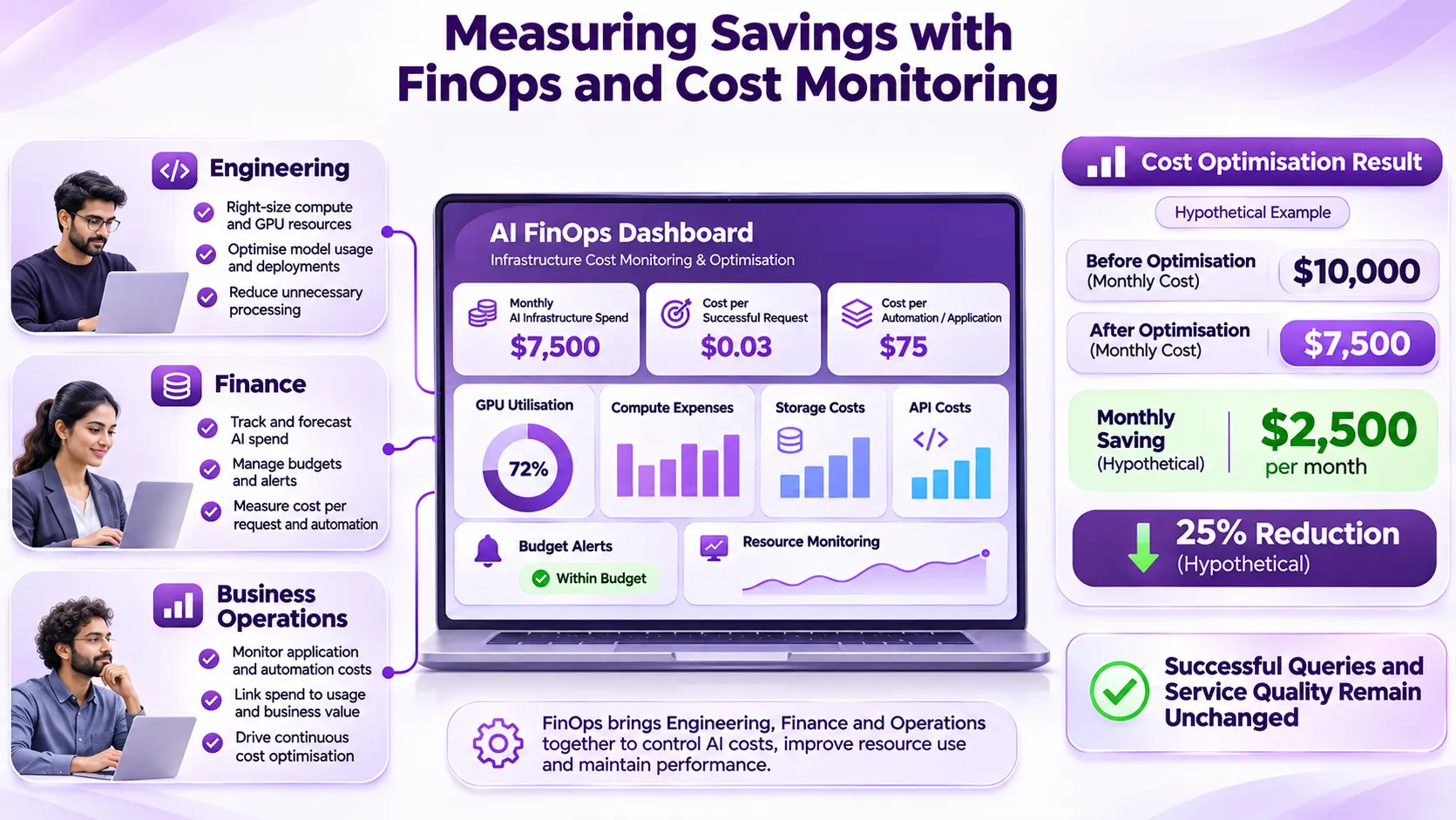
- FinOps improves cost management through shared responsibility between engineering, finance, and business teams, supported by budgets, alerts, ownership, and regular cost reviews.
- A hypothetical customer service example shows monthly costs falling from $10,000 to $7,500 through smaller models, reduced idle compute, and improved caching—a 25% saving without reducing service quality.
- MatchBest Software offers cloud hosting, AI development, data engineering, infrastructure management, monitoring, scaling plans, and performance optimisation to support infrastructure improvements.
- The best approach is to establish a spending baseline, identify waste, make controlled changes, and continuously balance cost, performance, security, and business value.
How Businesses Can Reduce AI Infrastructure Costs in 2026
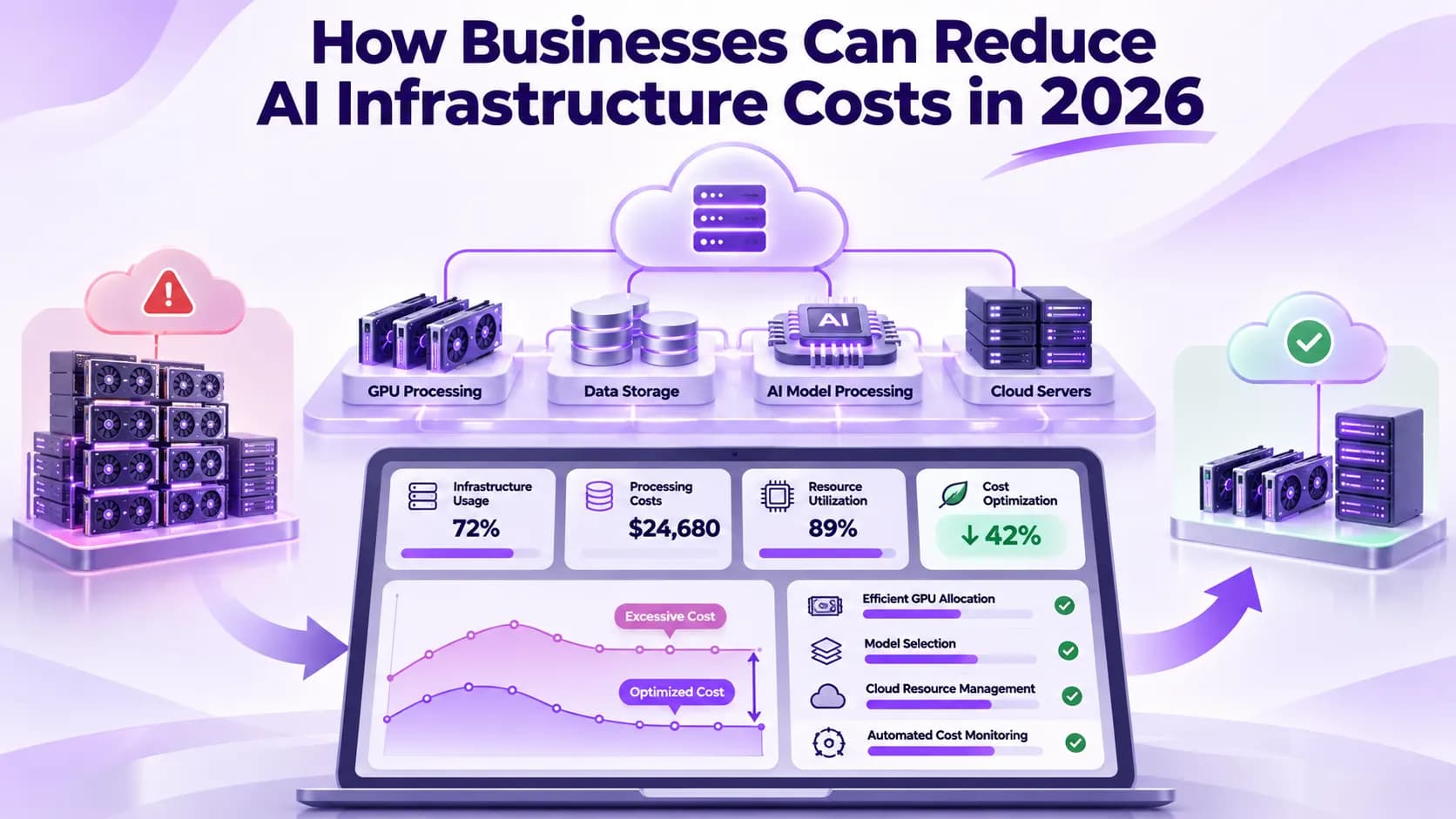
Whilst your AI application will perform well in testing environments, once it goes live you could start to see significant costs hit you. As your user-base grows and more requests are generated there will be more GPU processing during off-peak periods and greater storage requirements.
This can cause issues for companies looking to grow their AI capabilities and can gradually reduce any benefits gained from automation.
Optimising your AI infrastructure costs is a key part of operations in 2026.
With cost saving opportunities not affecting your operations and instead creating opportunities for you to ensure you are using the correct infrastructure, reducing waste and understanding which workloads truly add value to your business.
Quick Answer
Cost optimization in AI infrastructure aims to reduce costs of deploying AI workloads while maintaining the accuracy, security and performance of the system. Reduce costs by monitoring how much you’re paying per task successfully completed, using the right AI models, optimizing GPU usage, caching duplicate requests and managing your cloud resources. To begin, optimize current costs and trial optimizations.
Why Are AI Infrastructure Costs Increasing?
Contrary to classic applications, there may be significant compute usage associated with AI workloads for model training, inference and data.
Inference is when predictions/responses are generated using a trained model. This incurs costs while the application is being used.
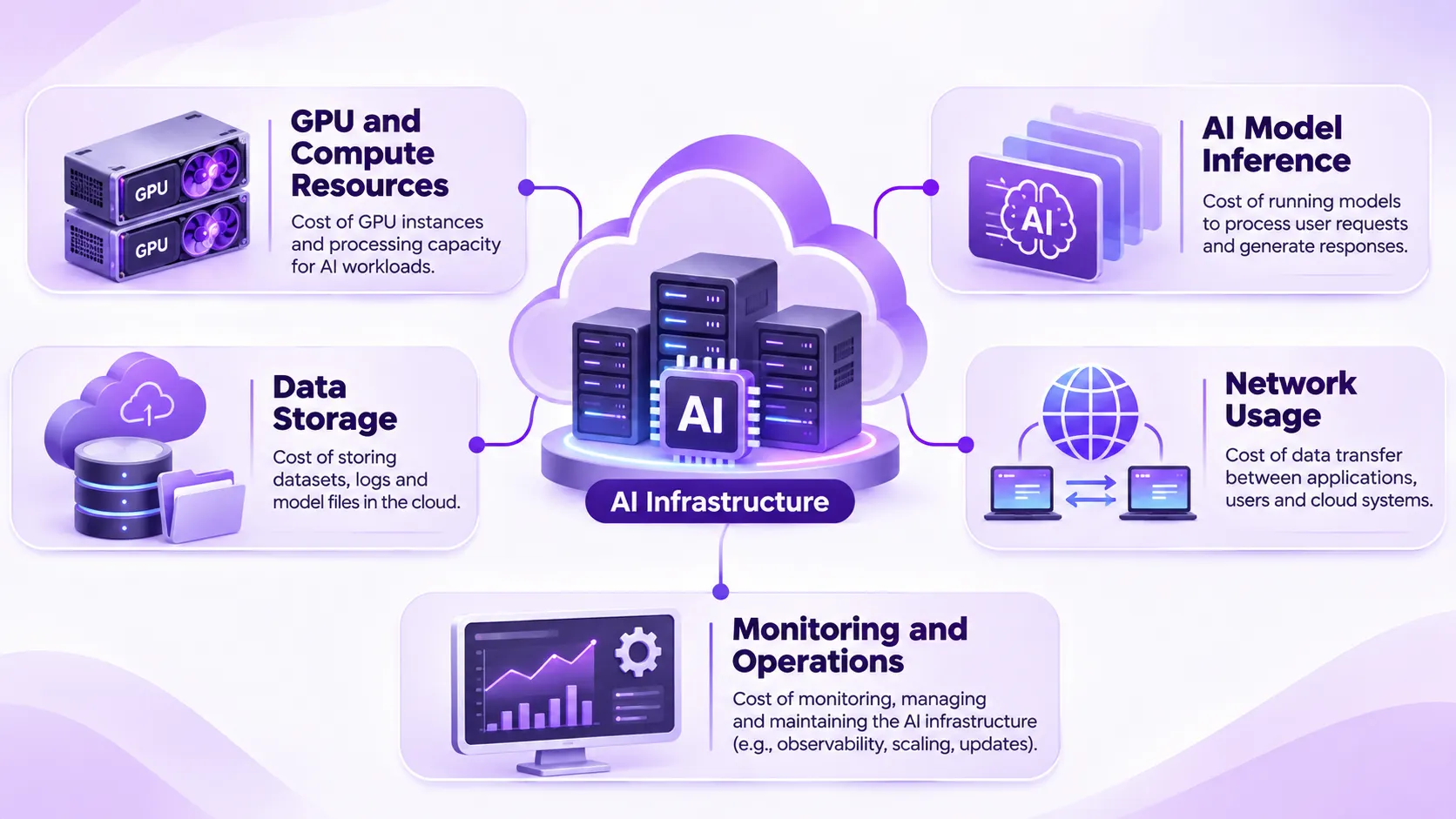
Costs will generally come from;
| Cost Component | What Drives Expenses |
|---|---|
| GPU and compute resources | Processing requirements and active capacity |
| AI model inference | Request volume, tokens, and model selection |
| Data storage | Stored datasets, logs, and model files |
| Network usage | Data transfers between systems and regions |
| Monitoring and operations | Infrastructure management and maintenance |
The challenge is identifying which resources contribute to useful outcomes and which remain unnecessarily expensive.
How Can Businesses Optimize AI Infrastructure Costs?
Effective cost management begins with understanding actual workload requirements rather than immediately reducing infrastructure capacity.
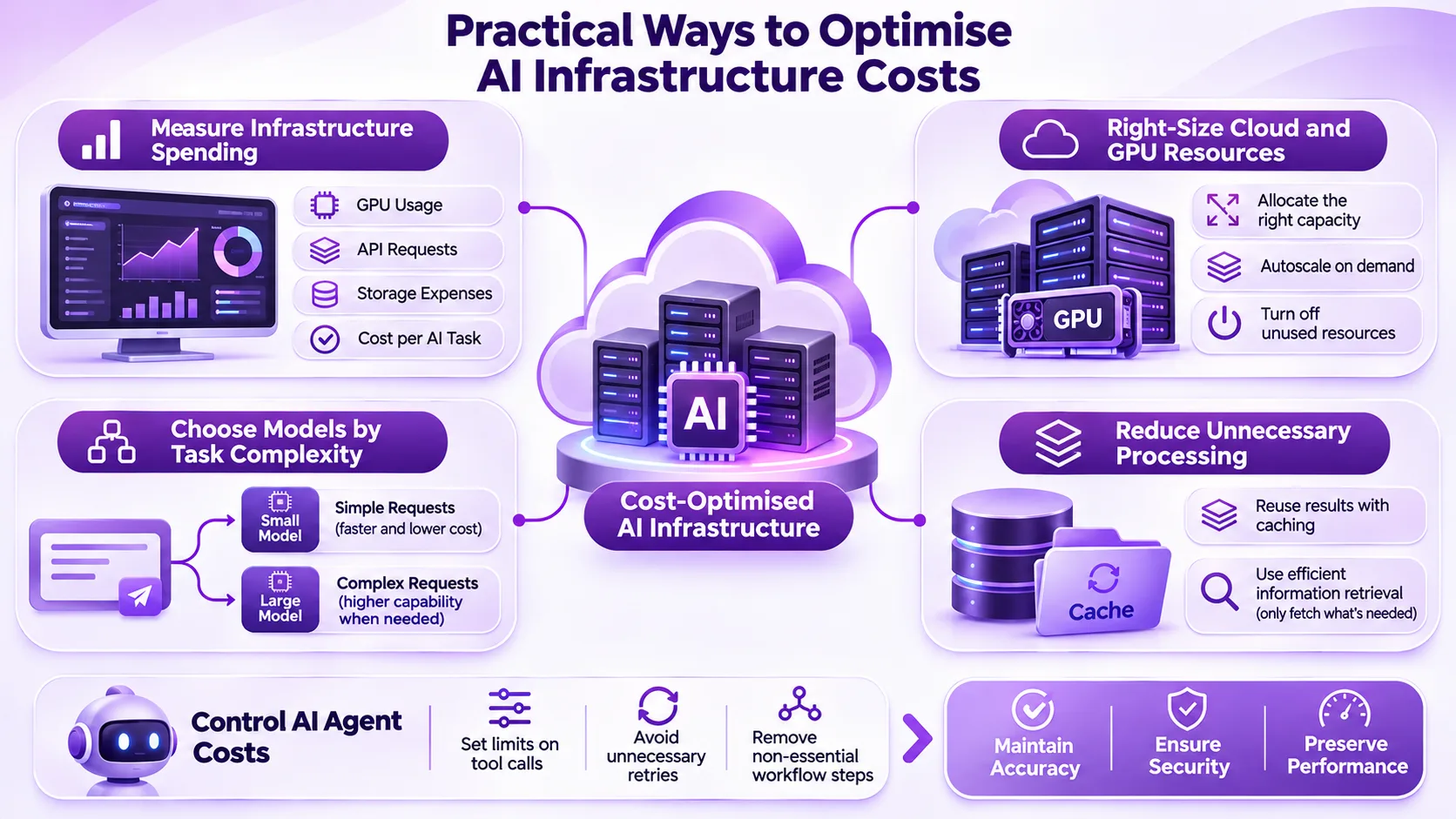
Measure Your Current AI Infrastructure Spending
Understand your current costs.
Break down costs into categories like application, environment, department and workload. For example, an AI chatbot might have the following costs:
- Cost of model requests
- Customer data requests
- Hosting
- Monitoring
Track metrics such as:
- Cost of each successful AI request
- GPU usage and downtime
- Model and API costs per month
- Storage and data costs
- Infrastructure costs per workload
One metric that can be very useful to track is cost per successful task. This will mean you don’t spend much if your system becomes less accurate.
2. Right Size Cloud and GPU Resources
Many companies will over provision their infrastructure meaning they spend too much on costly resources.
Right sizing means having just the right amount of infrastructure available.
This can be done by using a GPU instance of the correct size, autoscaling and disabling non production resources.
You can also look into cloud hosting providers that provide scalable infrastructure plus monitoring.
However, being very aggressive with reducing your resources can cause slower response times. Always test any changes to your infrastructure to make sure they are providing what you need them to.
3. Choose AI Models Based on Task Complexity
Not all businesses will require use of the largest AI models.
For simple tasks, such as ticket classification, these smaller models can be used but for more complex analysis you would need larger models.
A routing system can be created to send requests to different models.
This ensures that simple classification requests are sent to lighter models whilst more complex requests are sent to more powerful models.
This can help reduce inferencing costs. The team should also ensure that accuracy is maintained for a range of realistic scenarios within the business.
4. Reduce Unnecessary AI Processing
There may be additional costs.
A caching mechanism could be added to the application to store previous useful data.
The prompts could be optimised and a retrieval mechanism put in place to reduce the amount of irrelevant information.
Care should be taken when providing answers that need to use dynamic data.
Care should also be taken when providing sensitive or personal answers to make sure they are not re-used by other users without the proper access controls in place.
How Can Businesses Control AI Agent Infrastructure Costs?
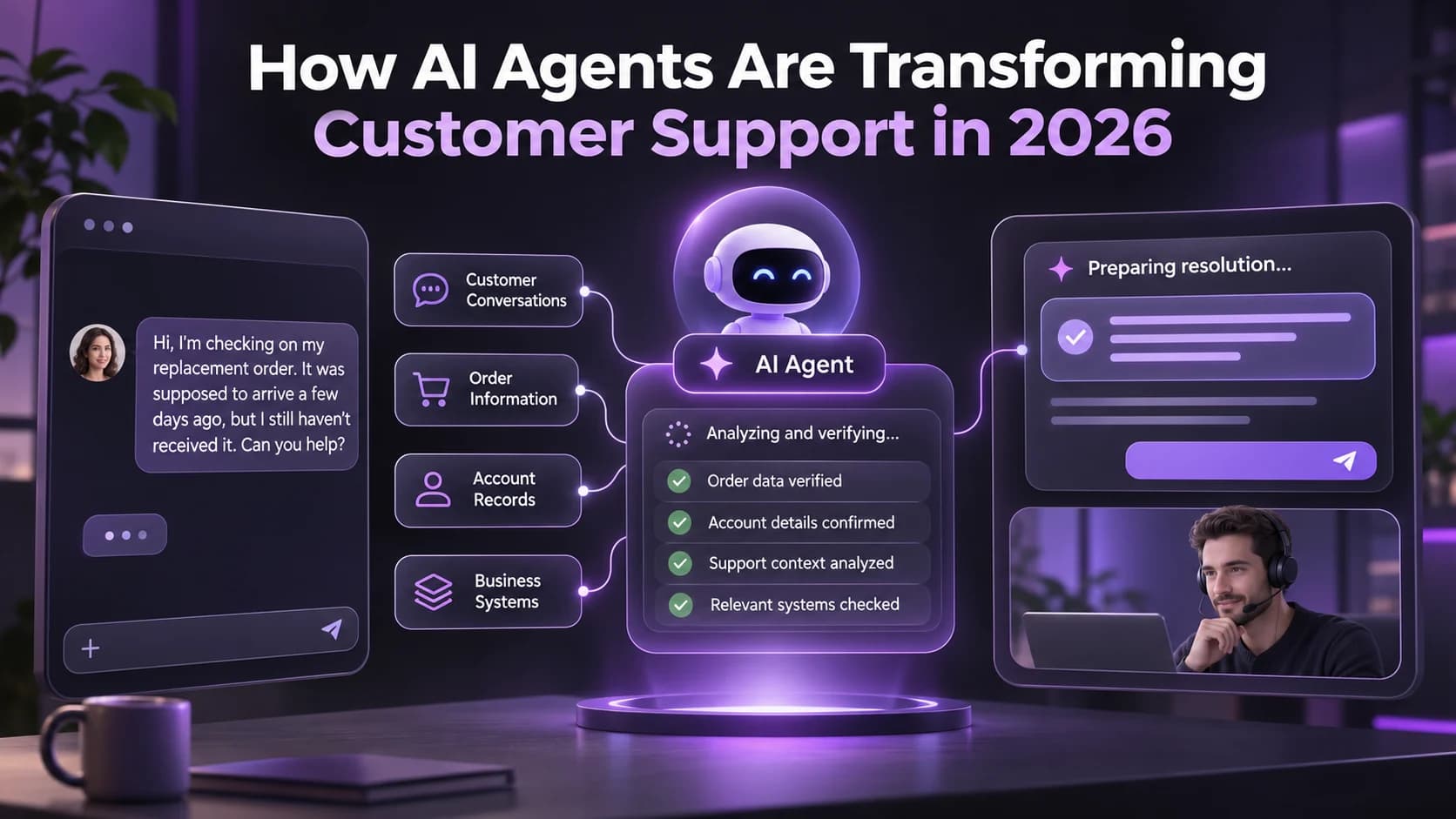
AI agents can add extra cost if there are lots of model, tool calls and validation steps required for one business requirement.
For example, a customer service agent might need to retrieve account information, review an order, check company policies and provide a response.
This will take resources, so put limits on how many actions are taken by putting limits on your business requirements. Try to keep the number of retries down, and don’t make workflows too complex if the business requirement is simple.
By implementing agent monitoring, you’ll be able to see how the tools are being used, how much it is costing per action, any delays and failure.
This will provide insight into how much useful work is being done by an agent.
Should Businesses Use Reserved or On-Demand AI Infrastructure?
The right pricing arrangement depends on workload patterns.
| Infrastructure Option | Suitable Scenario | Main Consideration |
|---|---|---|
| On demand resources | Variable or experimental workloads | Flexibility without long commitments |
| Reserved capacity | Predictable, sustained workloads | Potential discounts but commitment risk |
| Spot instances | Interruptible training or batch processing | Lower prices with interruption risk |
| Serverless inference | Irregular request volumes | Usage based charges and service limitations |
If you’re experiencing variable AI workloads you may find a flexible solution is best.
If you have workloads that are always being used, it may be cheaper to use reserved resources.
Look at overall costs and performance requirements before committing to any long term options.
What Does AI Infrastructure Cost Optimization Look Like in Practice?
Imagine an imaginary business that has implemented an AI-based customer service tool.
The monthly costs for the implementation of the tool (inference, compute resource usage and monitoring) are $10,000.
They review their usage and implement smaller models for simpler queries, reduce their idle compute resources and improve their cache.
This reduces their monthly costs to $7,500. The number of successful queries and service quality remains unchanged.
Savings per month = $10,000 - $7,500 = $2,500
A hypothetical 25% cost saving (before implementation costs).
These are just examples and do not represent any actual results or industry benchmarks.
They should also make sure they are still receiving accurate responses, customer satisfaction and less effort is needed to maintain.
How Can FinOps Improve AI Cost Management?
FinOps is a way of working alongside your Engineering, Finance and Business teams to reduce cloud costs.
Within your AI infrastructure you can allocate ownership to resources and control ongoing costs.
Set budgets, alerts and track your costs.
With data analysis tools you can ensure accurate reporting of your infrastructure, costs and performance.
By tracking valuable metrics such as cost per request, cost per automation and cost per application you can gain value from your organisation.
These should be regularly reviewed to make sure there are no unexpected spikes.
How Can MatchBest Software Support Infrastructure Optimization?
MatchBest Software provides cloud hosting, AI development and data engineering services. They offer a range of cloud support services including:
- Infrastructure management
- Monitoring
- Planning for scaling
- Performance optimisation
These services can be useful when looking at current AI workloads, optimising your cloud usage or preparing infrastructure for increasing application demands.
Organisations should first understand how much they’re currently spending using a baseline. They should also look at any costly workloads and set measurable performance targets. A technical evaluation will help you understand what infrastructure optimisation should be prioritised.
Final Thoughts
Reduce AI infrastructure costs in 2026.
Ensure you have insight into your resource usage, correct computing power, efficient use of models and effective cost monitoring.
The best way to reduce your costs is to ensure you identify any areas where you’re losing money and make changes that are controlled so you can see improvements.
Reducing your AI infrastructure costs comes down to a balance of finding the perfect amount of cost, performance, security and value for your business.
For more insights into cloud infrastructure, AI optimization, and emerging enterprise technology, explore business technology updates.
Frequently Asked Questions
What is AI infrastructure cost optimization?
AI infrastructure cost optimization will help you save on costs related to your AI compute, model inference, storage and cloud infrastructure, whilst maintaining performance.
Why can AI Infrastructure be costly?
AI systems can have large costs associated with them due to the need for high powered GPUs, lots of model requests, large data storage and ongoing infrastructure monitoring.
How can you save on GPU costs?
Improve GPU utilization, ensure instance sizes are correct, autoscaling and turn off any unused resources.
Can using small models reduce infrastructure costs?
Yes. Using small models can help to reduce the compute costs but they should still be suitable for the task and meet accuracy and performance standards.
What is FinOps?
FinOps helps businesses track, distribute and optimize their AI related cloud costs by having shared responsibility over finances.
How can you measure how well you are optimizing costs?
Track costs per successful task, resource utilization, compute costs, system accuracy and overall performance.