

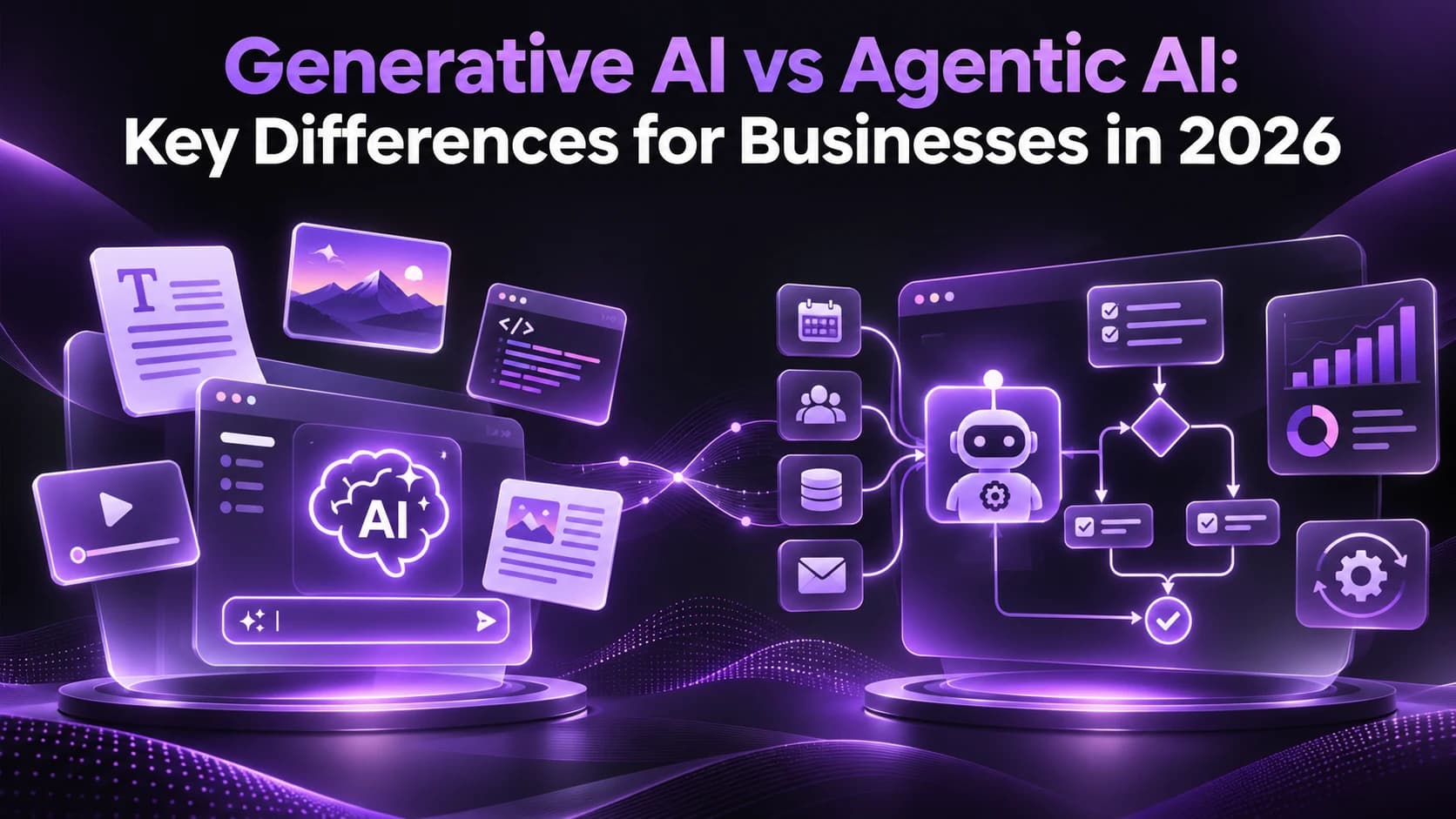
Key Differences for Businesses
An email marketing team may utilise AI to create email content within seconds. Someone will need to review customer data, approve the content, schedule it and update the campaign.
This is an important consideration.
It’s important to understand the difference between generative and agentic AI as businesses begin to move away from using AI generated responses to using systems that can work with and orchestrate processes in the real world.
Both of these can be used to improve processes, however they have very different capabilities, requirements and risks involved. This will help businesses invest in the right technology to solve a real problem they have.
Quick Answer
Generative AI can create content like text, images, code and summaries. Agentic AI can also build a plan, work with a series of tools and take authorised actions to achieve an aim. When selecting an AI solution for your business you should look at generative AI if you are looking to create content, whilst agentic AI is best for complex processes. You should ensure there is the correct human oversight and security measures in place.
What Is the Difference Between Generative AI and Agentic AI?
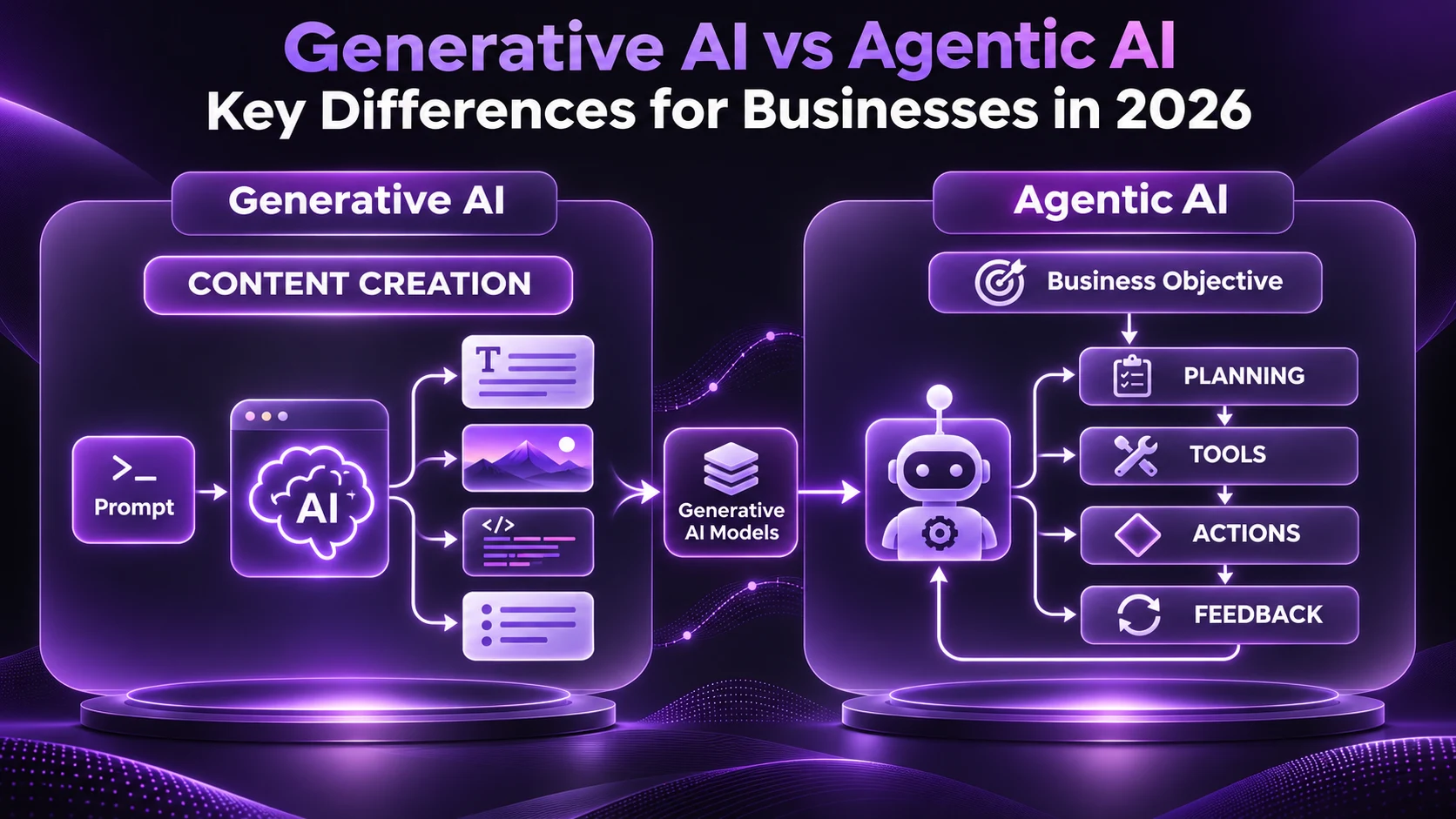
Generative AI is focused on creating and manipulating data using AI models that have been trained to generate outputs based on prompts, documents and other inputs.
Agentic AI is focused around completing goals. This AI technology works by combining AI models with planning, tools, logic and feedback functions.
These are not mutually exclusive technologies. Agentic systems will often use generative AI models to reason, understand and communicate.
Generative AI vs Agentic AI: Side by Side Comparison
| Factor | Generative AI | Agentic AI |
|---|---|---|
| Primary purpose | Create and transform content | Complete goal-oriented tasks |
| Main input | Prompts and contextual information | Objectives, rules, and available tools |
| Typical output | Text, images, code, or summaries | Completed actions or workflow results |
| Autonomy | Usually responds to requests | Can coordinate steps with less direction |
| System integration | Optional, depending on application | Central to most operational workflows |
| Human oversight | Reviews generated outputs | Approves sensitive actions and exceptions |
| Main risk | Incorrect or misleading content | Incorrect content and unauthorized actions |
The most important distinction is whether AI is expected to produce information or use information to accomplish something.
Where Does Generative AI Deliver the Most Business Value?
Generative AI is useful when you want to help staff create, summarise, or organise information.
You can quickly create campaign copy for your marketing team, summaries for customer service agents and even get some starting suggestions on code for your developers.
For example, an ecommerce company could use Generative AI to create multiple product descriptions based off of pre approved specs. This can then be checked by employees to ensure it is accurate, matches the tone and is consistent.
If you are looking into using visual content within your business you can look into using Generative AI tools. This can be used for creating images, videos and other creative content.
However, if you were to create a product description it will not automatically update your stock, approve pricing and publish your listing.
Further functionality would be required from your software.
When Does Agentic AI Become More Useful?
An agent can be used when there are multiple steps required such as.
Supplier data gathering, comparison and finding gaps plus approvals.
An AI Agent can be used alongside approved apps.
Agentic Systems will typically consist of:
- Plan: Plan on what is needed to complete the goal.
- Tools: Approved apps, APIs and databases.
- Context: Knowing what is going on.
- Controls: Stop certain actions from happening based on business rules.
- Insights: Knowing what is going on, what has gone on and any errors.
Businesses considering agent orchestration should assess how these components connect with their existing applications.
To get the most out of your Agentic AI the workflow should give you more value than just putting the instructions in place.
How Would Both Technologies Handle the Same Business Task?
Imaging a scenario where you have a company wishing to generate a report regarding their monthly sales figures.
Using Generative AI we can create a summary, notice any trends and add some comments.
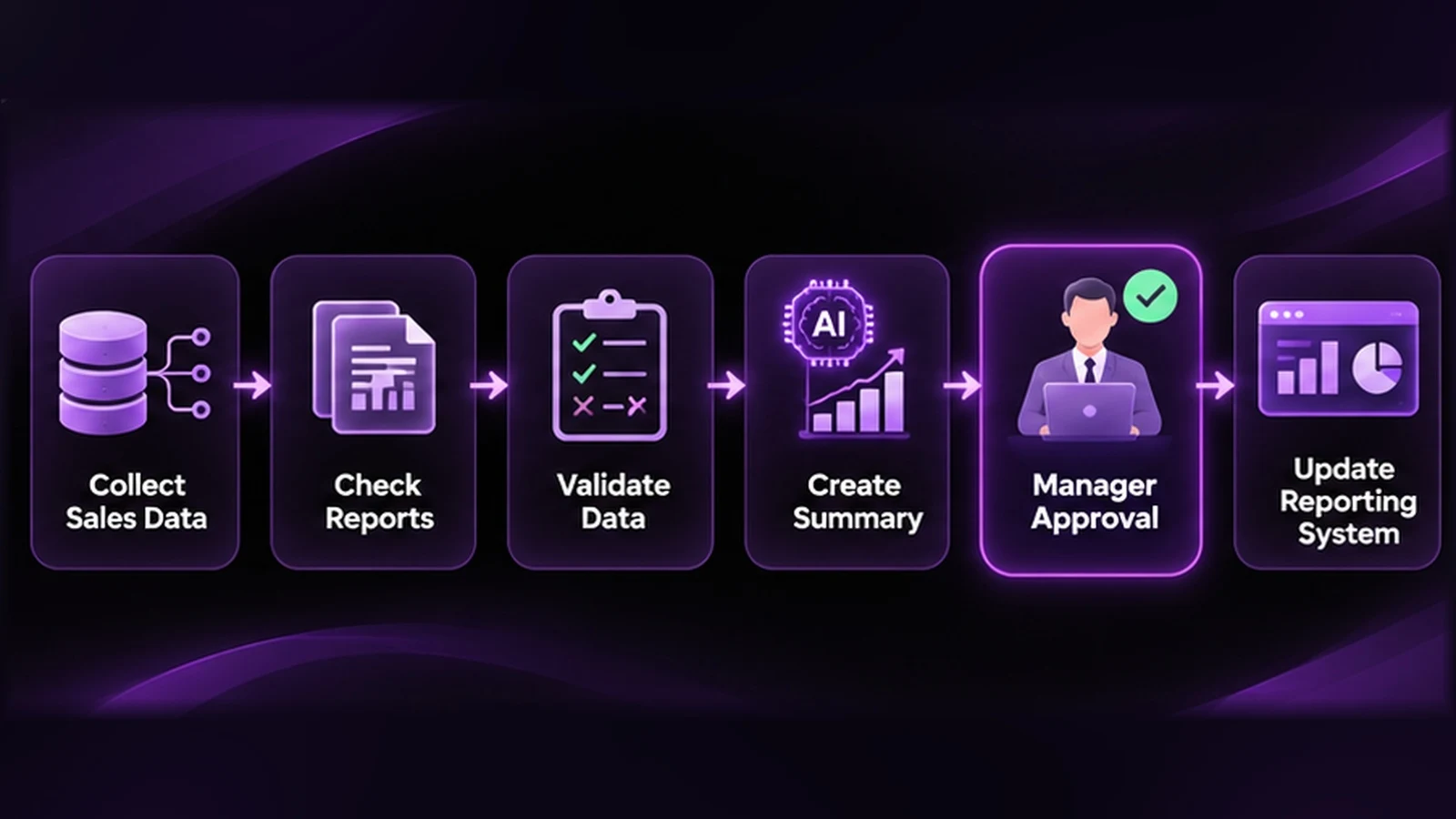
Using an Agentic AI Architecture:
- Bring in accurate Sales Data from connected systems.
- Ensure reports are available.
- Notice any missing or incorrect data.
- Create an initial summary.
- Send it to the appropriate Manager for approval.
- Insert the approved report into the reporting system.
Whilst this is a hypothetical example, it shows how Generative AI can produce analysis and Agentic AI can manage the workflow.
The final data and insight would need to be properly verified.
Is Agentic AI Always Better Than Generative AI?
It really depends on what you are looking at doing!
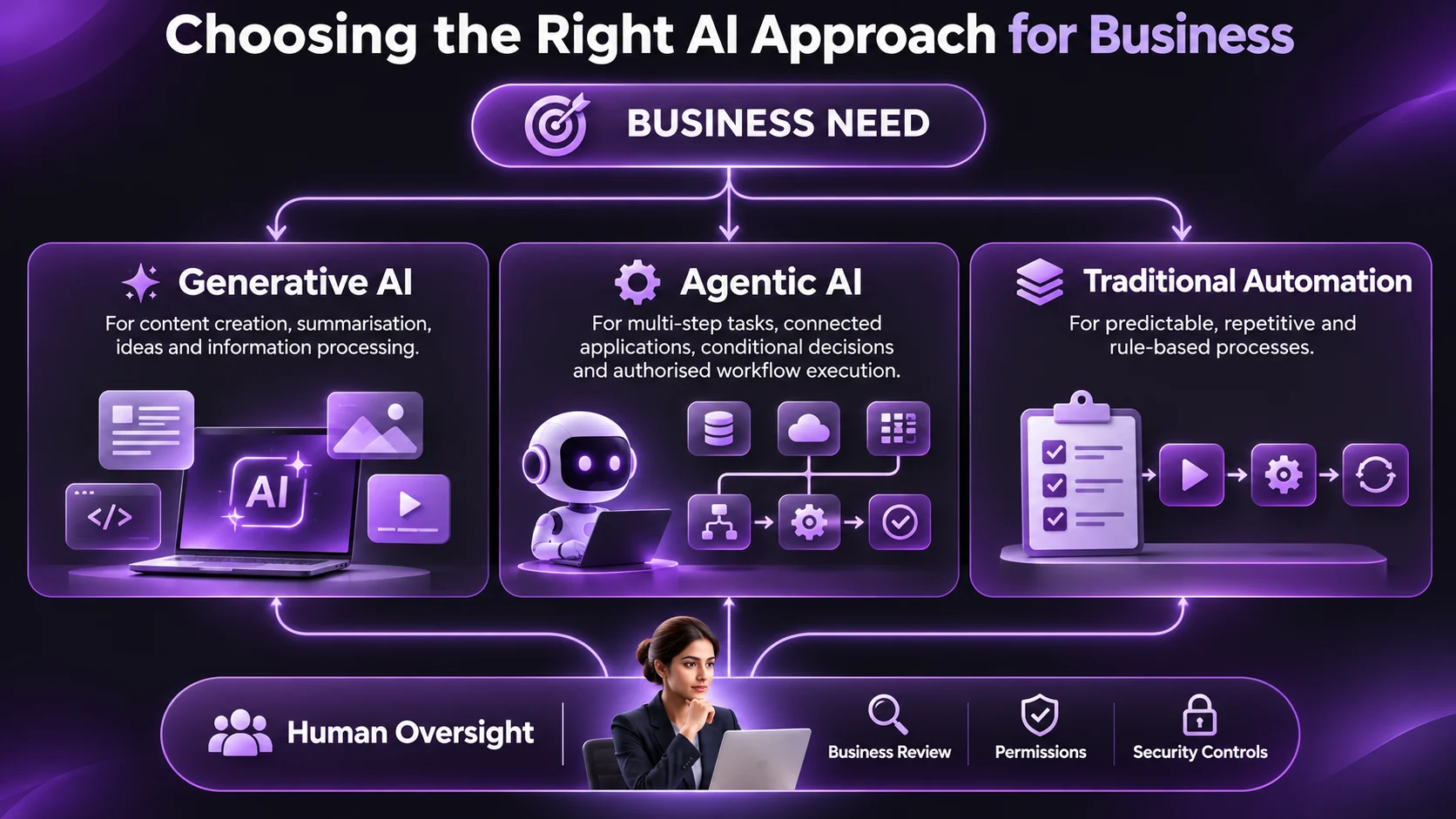
If you just want to create some content for your emails, summarise or get some ideas then a generative AI application may be enough.
Introducing agents can add extra complexity and make your environment less secure.
But if you are passing large amounts of data between your applications or have lots of decisions to be made then Agentic AI could be more appealing.
If your process is predictable then you may want to consider traditional rule based automation.
Keep it simple and dependable!
How Do Costs and Risks Compare?
Generative AI can be used as a plug and play solution using existing API tools you already have subscriptions for.
Agentic AI will require more effort than generative AI to get set up. With controls in place to ensure it is working correctly.
Cost will depend on how many models you have, complexity of tasks, infrastructure and human oversight.
Risks
There is a risk of incorrect reporting if Generative AI goes wrong. Or incorrect updates if Agentic AI goes wrong.
Ensure data validation, user control and approvals are in place.
To ensure that your AI processes require data from various areas within your enterprise, having strong data governance will be key.
Both will have some human oversight but Agentic will have more controls in place as it will affect live processes.
How Should Businesses Choose the Right AI Approach in 2026?
Practical considerations:
1. Clarify the business problem you are trying to solve
Are they looking for assistance with content creation or linked tasks?
2. Determine complexity
If tasks are simple to create then generative AI may be sufficient. If the task requires using multiple applications, dependencies and conditional logic then we may look to use agentic AI.
3. Think about data needs
What data is needed? Which systems will you need to integrate with? What permissions will be required?
4. Run a small proof of concept
Use realistic scenarios within a small workflow. Leave some gaps in the information and throw in some surprises.
5. What improvements are there for your business?
Compared to the previous method, has it improved? Has it reduced the time to complete, increased accuracy, reduced costs and reduced staff involvement?
Only scale if there is a clear improvement.
You can also use both.
Final Thoughts
Generative AI and agentic AI can help solve different but similar business problems.
Generative AI can be used to create and understand information, while Agentic AI will provide intelligent coordination.
However, neither approach will necessarily increase productivity.
The best approach will be to fully understand your business need, determine what level of automation you require and ensure that humans are working at the right level.
By 2026, choosing the correct solution will mean investing in solutions that will deliver tangible results in your business.
For more insights into generative AI, business automation, and emerging technology, explore AI industry updates.