


The Rise of Multi Agent AI Systems in Enterprise Automation
When a customer requests a refund, they will be interacting with several departments or systems within a business: Support, Finance, Inventory, Payment. Even if some activities are automated, there usually needs to be some manual coordination between the systems.
This is where a multi agent AI system can help.
A business can use multiple AI agents where each has a specific role to play that leads to achieving a common goal.
There needs to be a structure in place so that the AI models can work together effectively, ensuring accurate data sharing and responsibility.
Quick Answer
A Multi agent AI will involve several AI agents working together to complete complex tasks. Each AI agent is designed to do a specific task and the orchestration will manage how they communicate, delegate tasks and results. This can help increase flexibility within an enterprise automation system but can be achieved by using secure integrations, permissions, monitoring and human supervision.
What Are Multi Agent AI Systems?
Multi agent AI is made up of multiple intelligent software agents that work together to achieve a larger goal.
Each agent will typically have their own set of instructions, data access, tools and objectives.
An example of this could be an agent to gather customer data, an agent to verify financial data and an agent to create an operation report.
They are coordinated by an orchestration process which allows the output to be combined. This is different to a single agent approach where just one AI agent is responsible for the process.
Companies evaluating enterprise AI automation solutions should first determine whether their workflows genuinely require multiple specialized agents or whether a simpler architecture would work.
How Do Multi Agent Systems Differ From Single AI Agents?
The primary difference is how responsibilities are distributed.
| Business Factor | Single AI Agent | Multi-Agent AI System |
|---|---|---|
| Task management | One agent handles the workflow | Responsibilities are divided |
| Specialization | One agent uses multiple capabilities | Agents perform specialized tasks |
| Coordination | Simpler execution structure | Requires orchestration |
| Scalability | Suitable for focused workflows | Can support distributed operations |
| Complexity | Generally easier to maintain | Additional monitoring and integration needs |
| Error handling | One main execution path | Failures can occur between agents |
Not always. In some simple scenarios an individual agent will provide a cleaner solution with lower running costs.
Where processes are divided into different roles, require different permission levels or can be processed independently multiple agents can be useful.
How Does Multi Agent Orchestration Work?
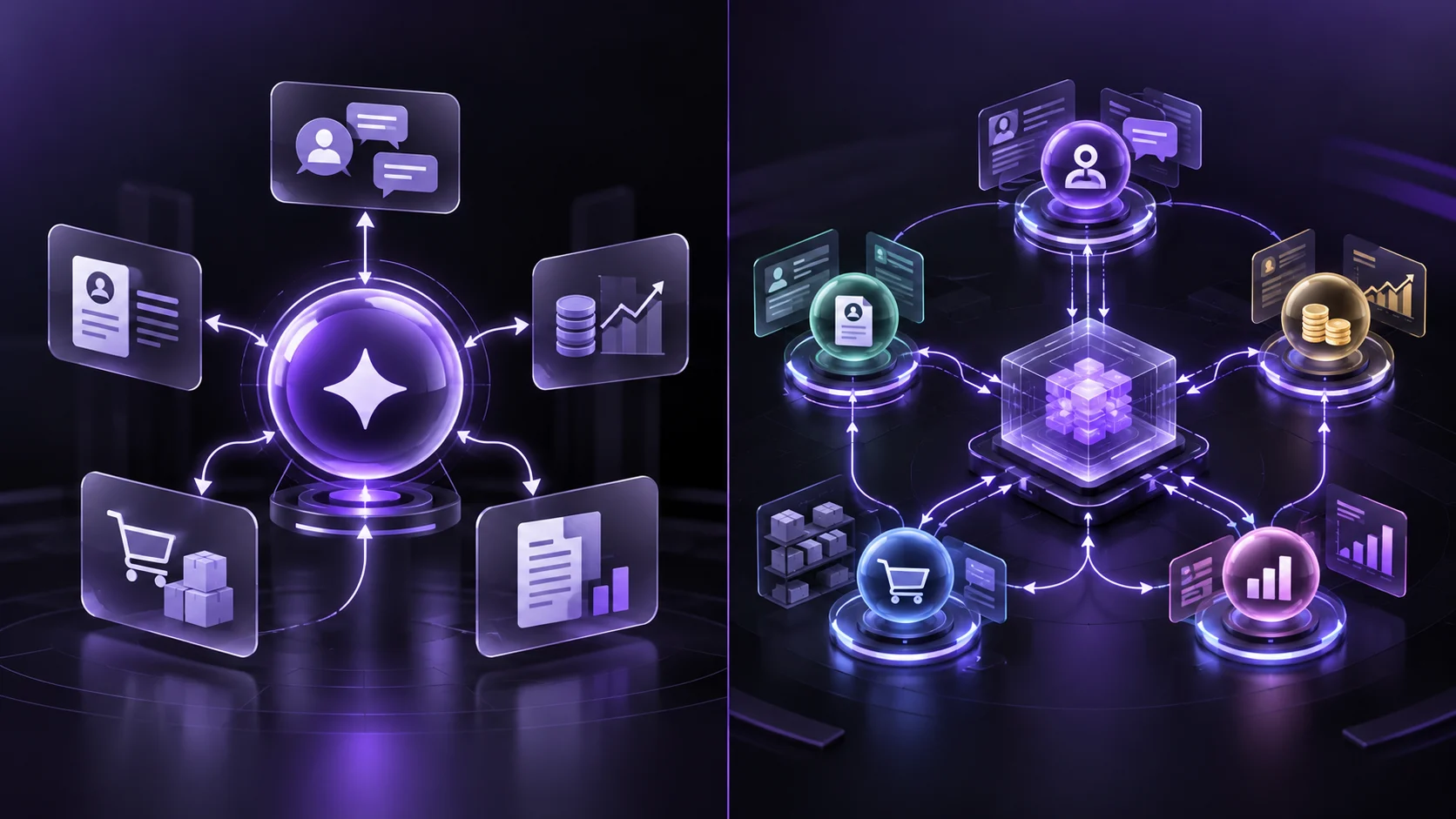
Orchestration determines how agents communicate, exchange information, and complete their assigned activities.
Within an enterprise system there are 3 key components:
Dedicated Agents
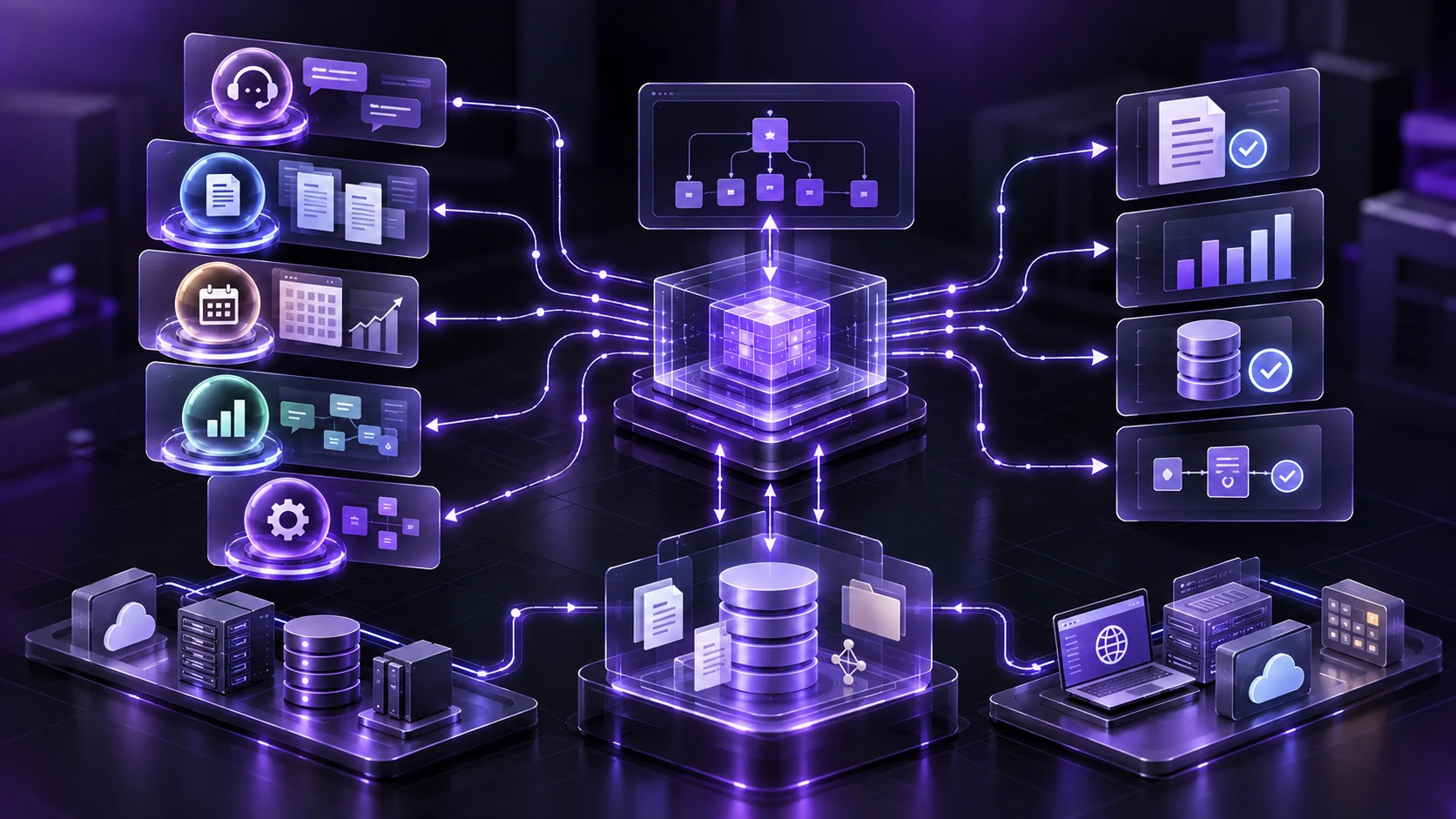
Each of the agents have a specific role to carry out such as retrieving information, verifying documents, scheduling or reporting.
This means there are clearly defined roles to work with.
Orchestrator
The orchestrator will decide which tasks go to which agents, monitor this and decide what needs to happen next.
Some processes will be sequential, whilst others will depend on the orchestrator deciding based on the information available what needs to happen.
Context & Output
The agents need to have access to the relevant information to carry out the task, but it shouldn’t give them full access to all of the business systems.
Using structured messaging, controlled state management and validation can help stop any inconsistency within the information.
When orchestrated well the 3 components form a single and manageable process.
What Does Multi Agent AI Look Like in a Real Business Workflow?
A Retail Company is looking to handle Refund Requests from Customers.
Traditionally this would be handled by an employee who would look up the order details, confirm delivery details, check refund policies and then get approval from Finance.
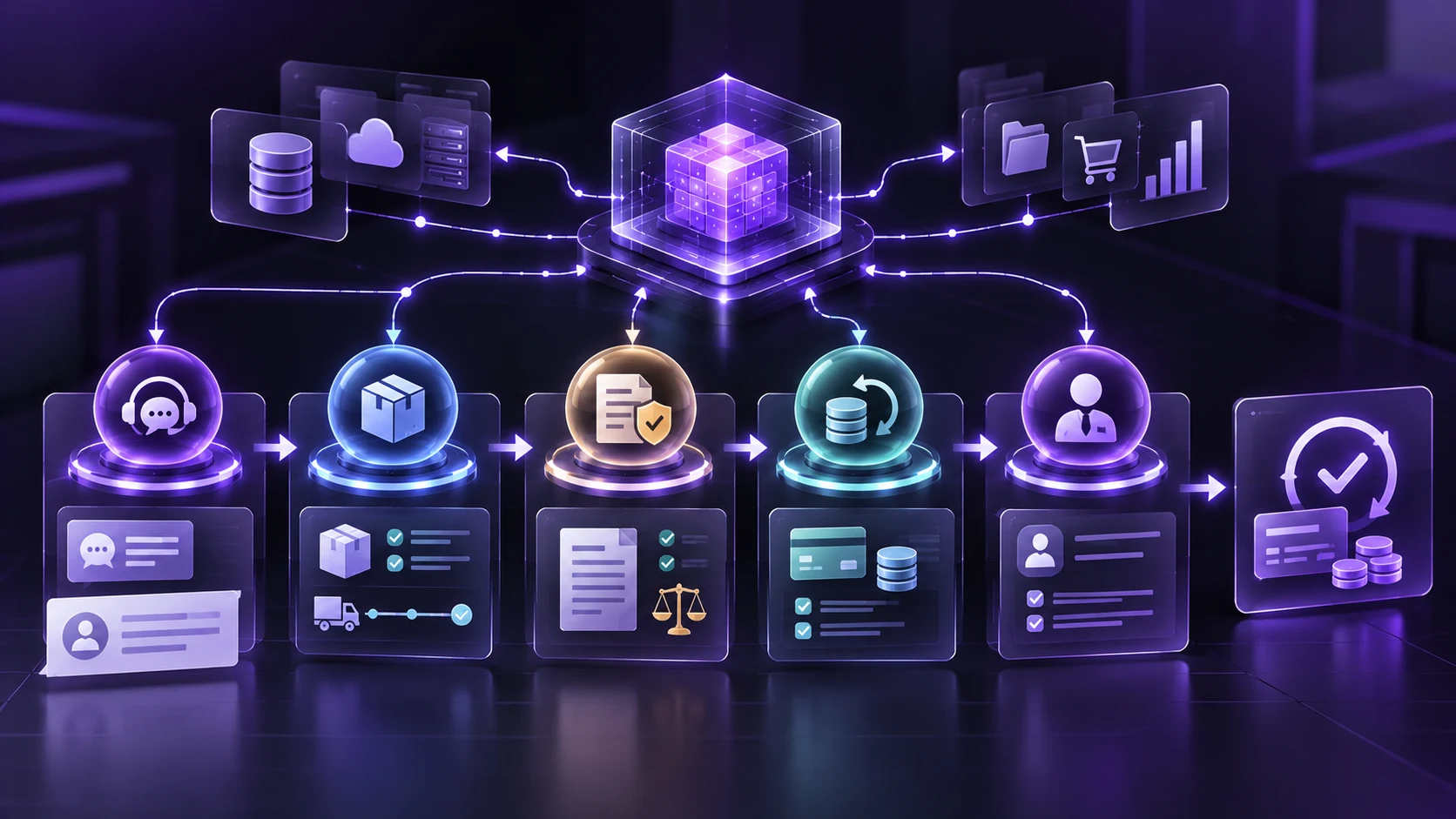
A possible multi agent approach would use 4 agents to help:
- Customer Support Agent: Takes the Refund Request, Identifies the Order and gathers any necessary information.
- Order Check Agent: Confirms the order exists in the system, was delivered and if it can be returned.
- Policy Check Agent: Reviews the request to see if it fits within any approved policies from the company identifying any exceptions.
- Finance Support Agent: Compiles refund details for an authorised employee to approve.
The information is passed between the agents with an orchestrator keeping track of the outcome.
This shows that having specialised agents can help reduce redundancy of information being passed around whilst still having approval processes in place.
Organizations seeking to understand this broader transition can explore how intelligent automation reduces operational bottlenecks within connected business processes.
Where Can Multi Agent AI Improve Enterprise Operations?
Supply Chain Coordination
Use a variety of agents to get visibility into stock information, get updates from suppliers, spot problems and suggest ordering.
This can help with decision making.
IT Service Management
Use specialist agents to watch for alerts, investigate application changes and gather information from infrastructures. This can be brought into a coordination system, incidents can be raised with technical teams.
Financial Operations
Use agents to help with gathering invoices, validating purchase orders, spotting exceptions and creating reports. Financial approval should always be carried out by the right people with the correct controls. Value can be created by coordinating these different specialist roles.
What Happens When AI Agents Disagree or Fail?
Multi agent systems can create new issues.
Agents can send outdated information whereas others will have up to date records. Different interpretations of a request can be made and tasks can loop between agents.
A linked application could fail during execution.
It is important for businesses to think about how they want these types of issues to be handled within the system.
Setting timeouts, maximum attempts, ensuring valid transfers and escalation processes are all useful tools.
A central log should be kept of who performed what actions.
If there are critical processes then any conflicts that haven’t been resolved should be escalated to a human and not allowed to be decided by the agents.
How Can Businesses Implement Multi Agent AI Successfully?
Start with a controlled workflow:
- Define roles: Define the process and the required roles.
- Orchestrate your workflow: Define your workflow, whether sequential, parallel or agent based.
- Create secure connections: Ensure that your agents can only connect to authorised tools and data.
- Test end to end workflows: Test your processes including: transitions, clashes, system outages and unauthorised actions.
- Measure your outcomes: Measure your successes by looking at how many tasks are completed successfully, the amount of effort spent correcting them, how long they take to process and total cost of operation.
Organizations should also establish responsible AI governance practices before deploying agents across sensitive business systems.
You will be able to prove there are tangible benefits from specialisation in a low risk scenario.
Are Multi Agent Systems Worth the Investment?
While flexible, multi agents require additional resources to coordinate between agents as well as utilise the models and maintain them.
Businesses need to compare the overall cost of using multiple agents against single agent or traditional automation.
This will involve looking at factors such as accuracy of tasks being completed, human involvement, time to complete and cost to fix errors. The best option will be the easiest to implement that reliably delivers the business goal.
MatchBest Group has several technology capabilities including agentic intelligence, AI orchestration, cloud infrastructure and enterprise software development.
This makes them relevant when considering the integration of coordinated AI workflows into your enterprise applications.
Final Thoughts
A multi agent AI system is a big step in automation. Using a series of specialised agents.
Roles should be carefully defined to ensure there is consistent orchestration, secure access and clear outcomes.
A well designed multi agent system can allow more flexibility throughout your processes within an enterprise whilst still making sure that key decisions aren’t being made by the AI.
For more insights into multi-agent AI, enterprise automation, and emerging technology, follow enterprise AI and technology updates on LinkedIn.